
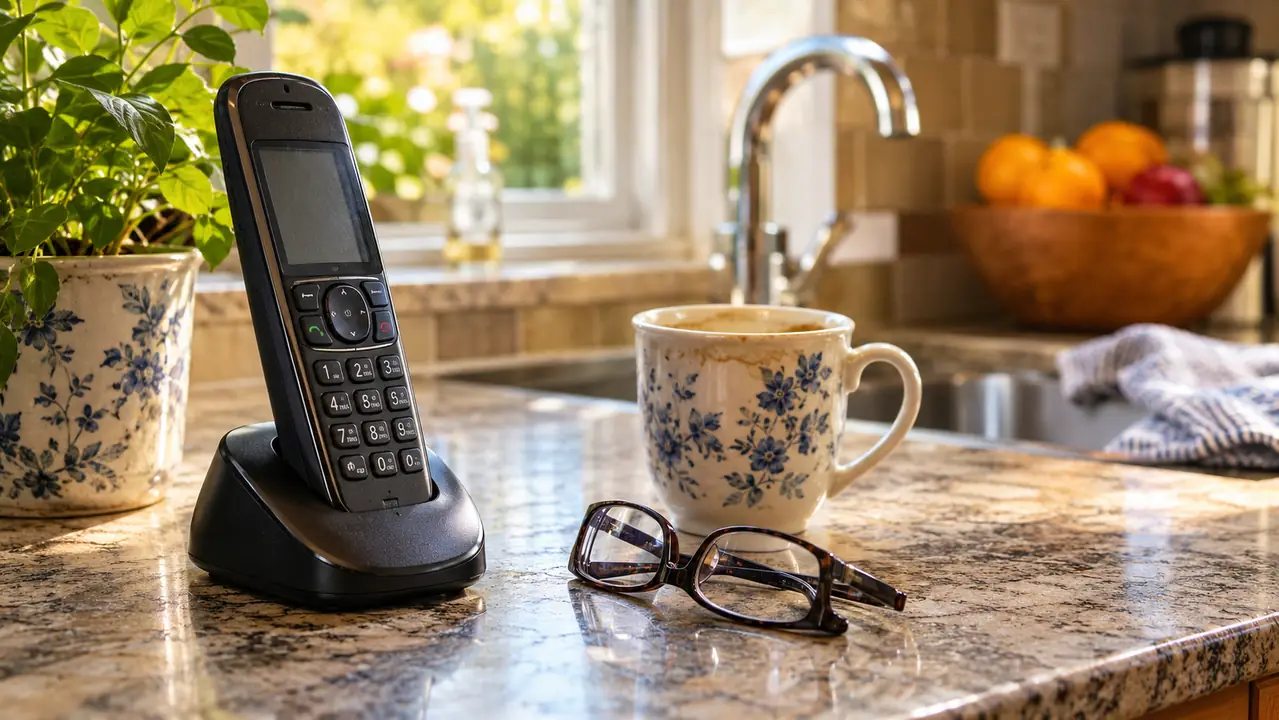
I bought the Panasonic KX-TGM420W because Carol had finally had enough. Not of me. Of the evening news at a volume that made the kitchen cabinets hum. I am 71, I spent 38 years as an electrician around job site noise, and at 66 an audiologist told me what I already suspected. Mild to moderate high frequency hearing loss in both ears, worse on the left. Consonants go first. Women and children's voices go next. By the six o'clock news I am filling in half the words from context and hoping I guessed right.
So I did what I have always done with a problem. I read the listings until my eyes crossed, I ordered the phone, and then I used it every single day for months before I sat down to write this. Not a week. Not a weekend. Long enough that the new wore off and the thing either earned its spot by the recliner or it did not. Here is the honest version, including the parts that did not work for me.
The Quick Verdict
The 40 dB boost and the Slow Talk button genuinely help me follow a call to the end. It is still a landline phone with a plastic handset, and it will not fix your hearing.
Amazon Check Today's Price →If a television volume argument is the reason you are reading this, start with the phone on your end.
The Panasonic KX-TGM420W does the two things that matter most at my kitchen table, louder incoming volume and slower speech, and it does them without a smartphone or an app. It is not a hearing aid and I am not selling one.
Amazon Check Today's Price on Amazon →The Part the Listing Does Not Explain
Loud is not the same as clear, and this is where I want to be careful, because a lot of amplified phone listings blur the two together. Turning up the volume on any phone makes everything louder, including the room. It does not automatically make the person on the other end easier to understand. What helped me with the Panasonic was not one thing. It was the combination. The volume boost brings the voice up above the refrigerator hum and the furnace. The Slow Talk button gives me a second pass at the consonants I miss. And the ringer is loud enough that I hear it from the garage, which sounds like a small thing until you have missed three calls from a granddaughter who wanted to tell you about a spelling bee.
Before I bought this one I tried the free fixes, same as most people do. I turned the old phone's volume all the way up and held the handset tighter against my left ear, which is the worse one. I sat closer to the television, which lasted about a week before my back quit. I turned on captions for the news and spent the whole broadcast reading instead of watching. None of that is wasted effort exactly, but none of it addresses the actual problem, which is that my ears hear the vowels fine and lose the consonants, and the consonants are the part that carries the meaning.
The other thing nobody tells you is that your own voice is not the problem. I can talk on the phone all day. What I cannot do is hear the other person when they turn their head or when a grandkid is talking from the next room with a mouthful of cereal. An amplified phone works on the incoming side. That is the direction it helps, and if you are shopping for something that fixes how you sound to other people, you are looking at the wrong end of the conversation.
Setting It Up Took Ten Minutes
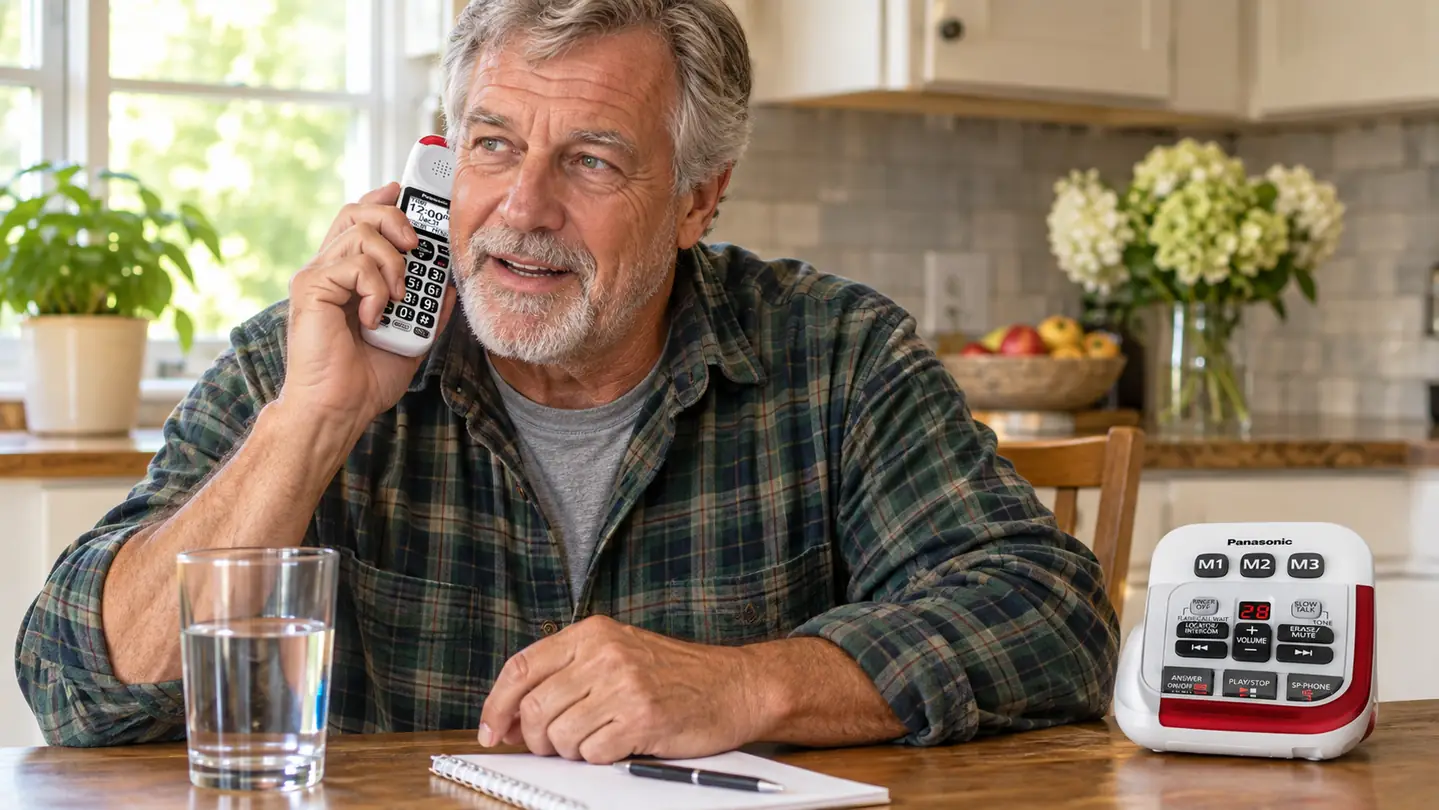
There is not much to say here, which is the point. The base plugs into the phone jack and into the wall, the handset takes two AAA batteries, and those came in the box. I put them in, set the handset on the base, and let it charge while I went out to the garage. By the time I came back in it was ready. Ten minutes total, and most of that was moving a desk to find the phone jack.
The one thing I will flag is that this is a landline phone. It needs a phone line to be useful. If your house is like a lot of houses now and the only line you have is a cell phone in your pocket, this is not going to do anything for you without some kind of adapter service. I keep a landline because I always have, and because in this part of Missouri a storm takes the power out often enough that I like having a phone that works when the internet does not.
How I've Used It
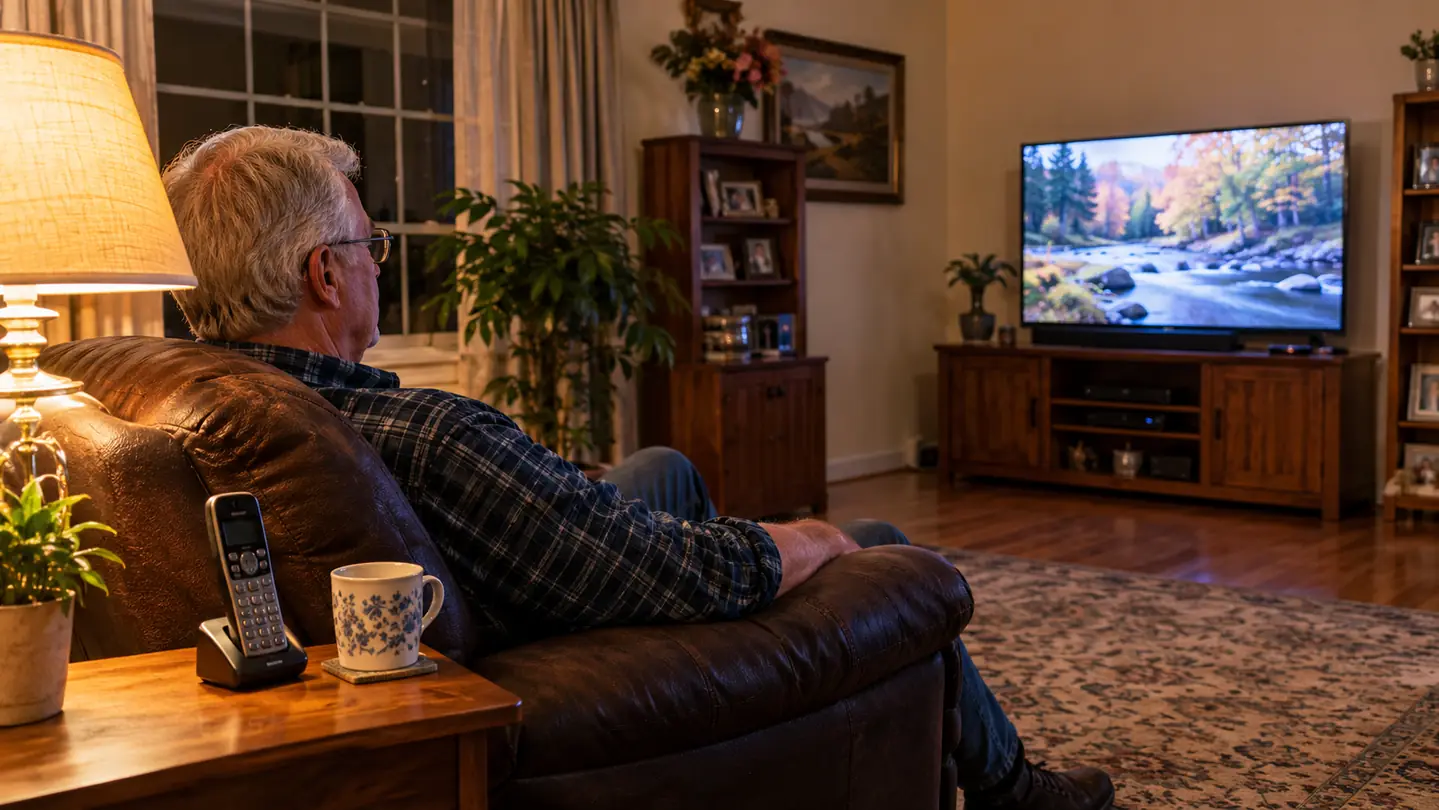
My setup is simple. One story ranch house. The base sits on the kitchen counter, which is where I take most calls because it is where the notepad lives. The handset goes with me to the recliner in the evening. Carol has normal hearing and she does not want to be parked in front of a phone on speaker, so the handset matters more than the base in this house. Nine times out of ten I am standing at the counter with a pen in my hand writing down a doctor's appointment or a part number for the hardware store.
Battery life has not been an issue. The specs say 13 hours of talk time and 9 days of standby, and I have not come close to running it dry in a day. It charges on the base whenever I set it down, which is what I do without thinking about it. That is the whole battery story. I have bought enough gadgets over the years that needed batteries sold separately that I want to say plainly that these were included.
The answering system holds about 17 minutes of messages. Carol and I are not running a business out of the kitchen, so 17 minutes is more than we will ever use. If you have a busy household with people leaving long messages, you might bump against that, and it is worth knowing before you buy rather than after.
The first month was the adjustment period. I kept picking up the handset and holding it the way I held the old one, and I could not find the volume control without going for my glasses. That is on me, not the phone. Once I learned where the buttons sit, it stopped being a fumbling exercise. The backlit keypad helps more than I expected, mostly at night when I am calling the pharmacy or the church office and the kitchen light is off.
Turning the volume up makes everything louder, including the room. Slowing the speech down is what finally let me follow a sentence all the way to the end.
What the 40 dB Boost Actually Does
The listing says up to 40 dB of volume boost. I am not going to pretend I can measure decibels in my kitchen. What I can tell you is that the top of the range is more than I need, and I run it well below maximum. On the highest setting with Carol on the line, she sounds like she is standing in the same room shouting into a paper tube. That is useful when the house is loud and uncomfortable when it is not.
Here is the practical version. I start around the middle and I move it up when the person on the other end is soft spoken or when the furnace kicks on. The grandkids call from noisy places, a school parking lot, a restaurant, a car with the windows down, and on those calls I go higher. You learn where you like it, and there is no single setting that covers every call. That is not a complaint. It is just how a volume control works.
Slow Talk Is the Feature I Use Most
There is a Slow Talk button on the handset. When I press it, the voice on the other end slows down, and it happens in real time while the person keeps talking. They do not know it is happening. That is the part I appreciate most. Nobody has to repeat themselves for my benefit, and I do not have to say the sentence I hate saying, which is asking someone to please say that again for the third time.
It does not sound perfectly natural. A slowed down voice sounds a little stretched, and on the first two or three calls it is distracting enough that you notice it more than the words. I got used to it inside a week. Now I press it when someone gives me a phone number or an address, and I press it for my daughter, who talks about as fast as anyone I have ever met.
For me this is the feature that separates the Panasonic from a plain phone with the volume turned up. Loudness helps. Slowing down helps more. If I had to give up the boost and keep the Slow Talk button, I would, and I would not think about it twice.
The Ringer, the Screen, and the Small Stuff
The ringer is rated at 100 dB and there is a visual alert as well. I can hear it from the garage with the door up. Carol can hear it in the backyard. The large screen shows the caller's name in letters I can read without hunting for my glasses, which is a bigger deal at 71 than it sounds when you are 40. The keypad lights up, so dialing in a dim room works fine.
The call block holds 100 numbers. I have used it. You would be surprised how many calls come to a house in Rolla from people who are not from Rolla. There are 9 speed dial entries and I have four of them filled, Carol's cell, both kids, and the pharmacy. The system expands to as many as 6 handsets if you have a bigger house than we do. We run one handset and one base, and for two people and one phone line that is plenty.
It is a DECT 6.0 cordless phone with a plastic body, and the listing puts the weight at 1.1 pounds. It is compatible with a headset, which matters if you sit on long calls. There is a three way conference option I have never used and probably never will. The enclosure material is listed as plastic, and it feels like plastic, in case you were expecting something else from a phone that costs what this one costs.
Where It Fell Short For Me
I want to be straight with you, because a review with no complaints in it is a sales page wearing a review's clothes. First, it is a handset. It is a handset you hold to one ear, and my worse ear is the left, so I still turn my head to put the right one against it. If your loss is significant in both ears and you struggle without amplification in both, one phone against one ear is not the whole answer, and I would not tell you it is.
Second, and this is the honest one, I still miss words. The boost and the Slow Talk button take me from catching maybe half of a call to catching most of it. Not all of it. When my granddaughter calls from the car with the window down and the radio on, I still hand the phone to Carol for the last part of the conversation. If you are expecting a phone to make a hard call easy, you will be disappointed. If you are expecting it to make an impossible call possible, that is closer to what I got.
Third, I am not an audiologist and I am not going to play one on the internet. If you have not had your hearing tested, get it tested before you buy anything at all. I put it off for years because I figured it was age and stubbornness, and the test took less than an hour and told me exactly what I was dealing with in both ears. A phone is a tool. It is not a diagnosis and it is not a treatment. Anybody who tells you otherwise is selling something.
What I Liked
- The 40 dB volume boost is more than enough for me, and I run it well below maximum
- Slow Talk slows the other person's speech in real time, and they never know it is happening
- 100 dB ringer with a visual alert, audible from the garage with the door up
- Large screen and a backlit keypad, readable without hunting for my glasses
- 100 number call block and 9 speed dials, both of which I actually use
- 13 hours of talk time and 9 days of standby, and the two AAA batteries came in the box
Where It Falls Short
- It is a landline phone, so it needs a phone line to do anything at all
- Slowed speech sounds stretched for the first week or so
- The top volume setting is uncomfortably loud for a spouse with normal hearing
- It only helps the incoming side, it does nothing about how you sound to other people
- 17 minutes of message recording is short for a busy household
Who This Is For
This phone is for somebody like me. Mild to moderate hearing loss, worse in one ear, most of the trouble landing on consonants and on voices that are soft or fast. You still have a landline, or you are willing to keep one. You take calls at the kitchen table and in the recliner, and you are tired of asking people to repeat themselves four times in one conversation. It is also for the spouse who is tired of the television at full volume, because a phone you can actually hear means the set does not have to carry the whole house anymore. Carol noticed within a week, and she noticed in the direction of being pleased.
Who Should Skip It
Skip it if you have gone entirely cellular and have no interest in a landline, because without a line this is a plastic paperweight. Skip it if your hearing loss is severe and your audiologist has told you that you need more than amplification at the ear, because this is not that and I would not pretend otherwise. Skip it if you want a phone that does everything, because this one makes calls, takes messages and blocks nuisance numbers, and it does not do much else. And skip it if you are using the search for a phone as a reason to put off the hearing test. Get the test first. Then come back and buy the phone.
The phone did not fix my hearing. It fixed my phone calls, which was the job I hired it for.
That is the whole of it. The Panasonic KX-TGM420W gives me the volume and the Slow Talk button, and Carol gets her evenings back without the news at full volume. If your situation sounds like mine, it is a reasonable place to start.
Amazon Check Today's Price on Amazon →