The number in the corner of the screen kept climbing. Thirty-two. Thirty-eight. Forty-four. Carol would get up out of her chair during the five-thirty news and find something to do in the kitchen, and for about two years I told myself the television had gotten quiet. It had not gotten quiet. My ears had.
An audiologist told me at 66, after 38 years of running conduit and pulling wire around job-site noise, that I had mild to moderate high-frequency hearing loss in both ears, worse on the left. Consonants go first. Women's and children's voices go next. Dialogue buried under background music is the daily problem, and no volume setting on a 55-inch set was going to fix it. I tried closed captions, which work, and which I still use for British shows. I tried an old pair of headphones on an eleven-foot cable to the TV's headphone jack, which worked fine until I snagged the cord twice and Carol made me put it away. The Avantree Ensemble is the third thing I tried, and the only one still sitting on the side table.
The Quick Verdict
Clearer dialogue at my own volume, and Carol gets her evenings back. The catch is setup: your TV needs the right audio output, and the TV's own sound settings have to be correct before any of it works.
Amazon Check Today's Price →Watch at Your Volume and Let the Rest of the House Keep Theirs
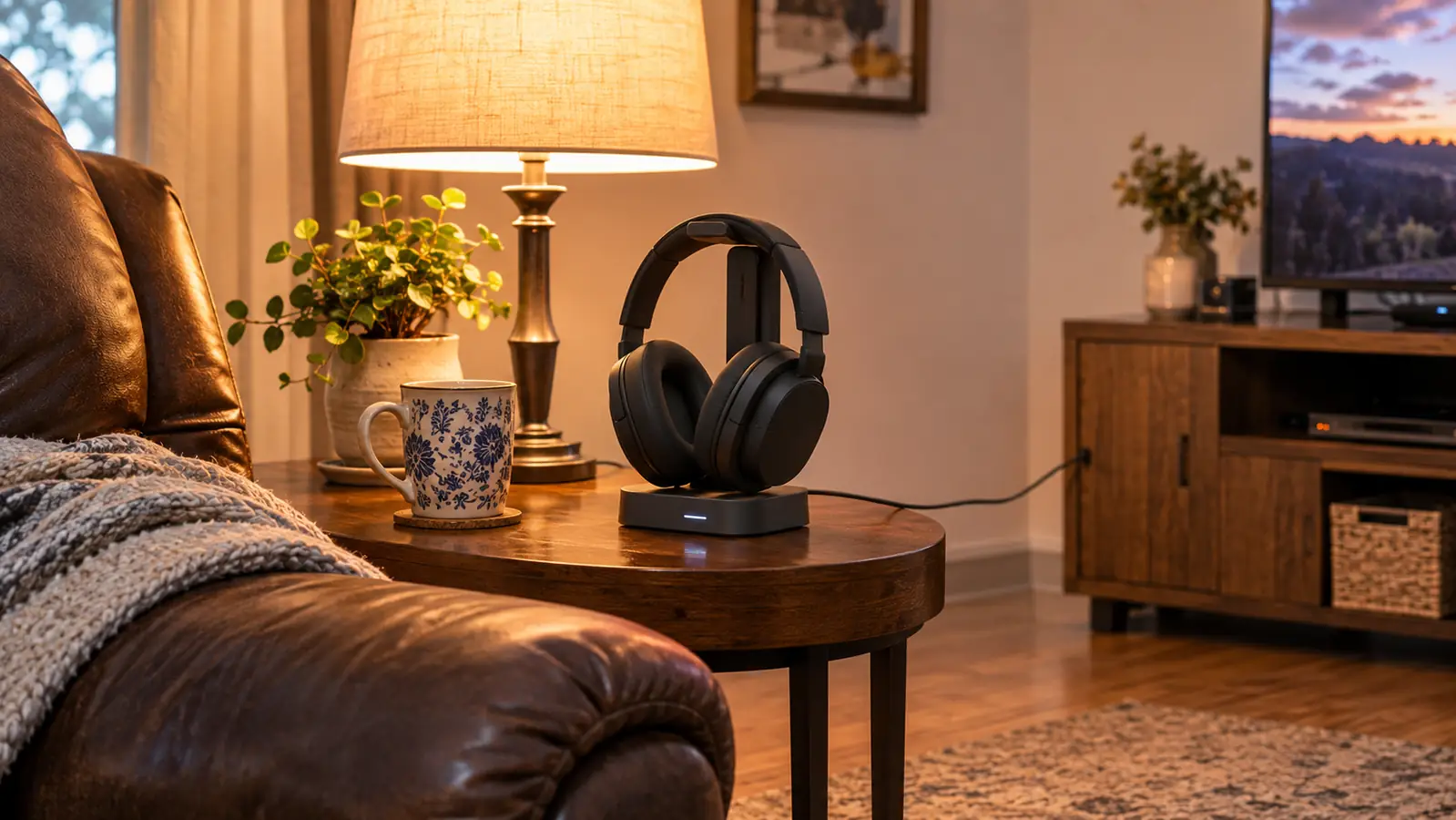
The transmitter is built into the charging dock, so there is one thing to set down at night and pick up the next evening. Check the back of your set for an optical or 3.5 mm jack before you order.
Amazon Check Today's Price on Amazon →How I've Used It
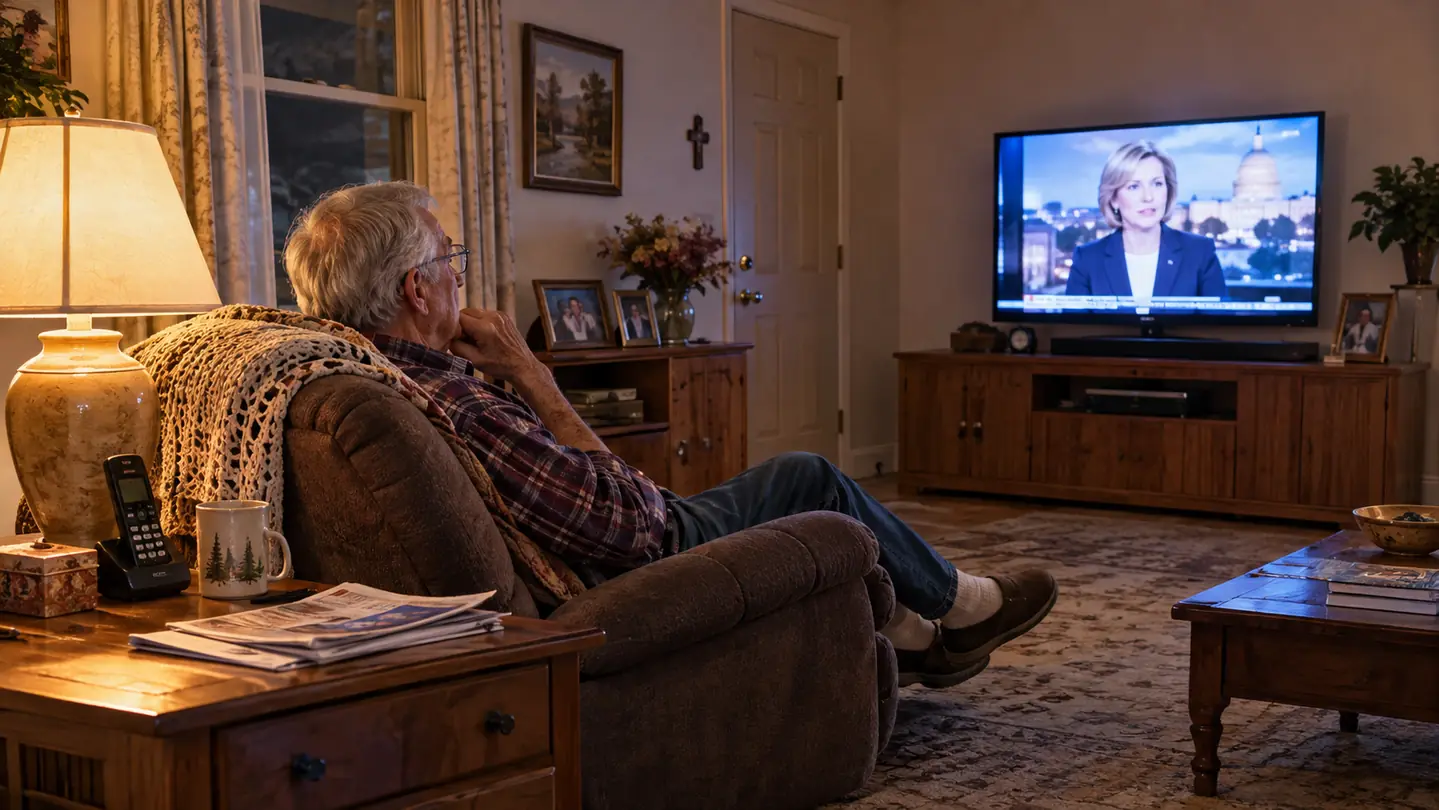
My routine is not complicated. The news comes on at five-thirty. I am in the recliner, about eleven feet from the set, with the headphones on. Carol is either in the kitchen or on the far end of the couch with a library book, and the television volume sits where she likes it, somewhere around 18. I hear everything at my own level. She hears almost nothing, which is the point.
After the news I usually stay put for a ballgame. That was the test I did not expect to pass. Crowd noise is exactly the kind of thing that used to swallow a play-by-play call, and instead the announcers sat on top of it. I have also used the Ensemble for the Sunday streaming shows Carol will not sit through, the ones where the score does all the talking and the actors mumble into their collars.
I have worn them two to three hours at a stretch, most nights, since spring. I have not once given up and gone back to the speakers out of frustration. I came close in the first week, and that had nothing to do with the headphones and everything to do with my television menu, which I will get to.
I want to be plain about one thing before I go further. I am not an audiologist and I am not selling anybody a medical device. These are headphones. If you have not had a hearing test, go get one, because a headphone set cannot tell you what is going on inside your ears. What I can tell you is what changed in my living room, and what did not.

What Comes in the Box, and What Your TV Has to Have
The Ensemble is a two-piece system. There are the over-ear headphones, and there is a charging dock that also carries the transmitter. The box includes the headphones, the dock, an optical audio cable, and a 3.5 mm aux cable. You are not pairing this with a phone and hoping for the best. The dock takes the audio from the television and sends it out to the headphones, which is why it behaves the same way every single night.
Here is the part that decides whether this review is useful to you. Avantree puts it in the first line of their own listing, and they are right to: your TV has to have an optical (TOSLINK) output or a 3.5 mm aux output. Mine has both. I went with optical because it keeps the television's own speakers live for Carol, though whether yours will do that depends on your set and how it is set to send digital audio. That is a television setting, not a headphone setting, and it is where most of the fiddling happens.
The first night was a washout. I had sound in the headphones but it was thin and slightly behind the picture, because the television was still sending the wrong format. Avantree's setup note warns about exactly this and I had skimmed right past it. Twenty minutes in the sound menu, one setting changed, and it has been right ever since.
I am not going to tell you this is plug and play for everybody. If your set is old enough to have neither jack, no amount of fiddling will save you, and you should look at the back of it before you spend anything. That is not me being cautious. That is the difference between a good evening and a box going back.
Dialogue First: The Evening News Test
What I care about is whether I can understand the words. The first thing I noticed was consonants. The S sounds, the T sounds, the ends of words. A correspondent standing in wind outside a courthouse, talking over traffic, and I could hear the whole word instead of the front half of it. That sounds like a small thing. It is not a small thing when you have spent four years filling in the blanks from context and getting it wrong.
The surprise was the ball games. I expected crowd noise to swamp everything. Instead the play-by-play came forward and the crowd sat behind it. I do not know what the dock does inside, and I am not going to guess at the engineering, but the practical result is that speech arrives in front of the background instead of inside it.
There are limits, and I would rather tell you than have you find out. A film where the score is doing the talking, the kind where the brass section drowns out the confession, still gives me trouble. I turn the volume up on those and let it go. The Ensemble makes the ordinary case better. It does not turn a badly mixed movie into a well-mixed one.
Carol noticed before I did, which tells you something. About three weeks in she said the house seemed quieter and asked whether I was watching less television. I was watching the same amount. I had just stopped pushing the volume to 44. She has started sitting through the whole news again, and the running commentary she gives it is back, which I did not realize I had missed until it returned.
The Dock, the Weight, and the Touch Controls
The headphones weigh 234 grams, about eight ounces. The earmuffs I wore on job sites for three decades weighed more than that. I notice them for the first twenty minutes and then I forget I have them on. They are over-ear, so the cushions cover the whole ear, which is the only kind I can stand for a full evening.
The dock is the part I did not expect to care about. I set the headphones down on it at the end of the night and pick them up the next evening, and I have not once found them dead. I could not tell you the exact hours they run, because I have never run them flat and I have not timed them. I plug the dock in, I set the headphones on it, and that is the whole charging routine.
Controls are touch, on the earcup. I tap to pause when Carol says something and tap again to start. It took about a week before my thumb found the right spot without my looking at it. The first few nights I hit the wrong place twice and shut them off in the middle of a program, which is annoying and also my fault.
They are over-ear with passive noise cancellation, which is a plain way of saying the cushions cover your ears and block some room sound. It is not the active kind. What it means in practice is that the furnace kicking on does not drown out the television, and I do not have to chase the volume up and down all evening.
The dock sits on the side table next to the recliner and the cable runs behind the couch to the television. It is not a pretty arrangement and I did not try to make it one. If you are the sort who cares how a living room looks, decide where the dock goes before you set it up, because the cable has to reach the set.
Where It Comes Up Short
Setup is on you, and it is the whole ballgame. If you are not willing to open your television's sound menu and change a setting, or you do not have a son-in-law who will, then buy something else or line up help first. Avantree says it in the listing and I will say it here: the TV audio output has to be set correctly or you will get silence, or worse, a hum that makes you think the thing is broken.
The other shortfall is that this is a television tool and nothing more. I have not tried to use it with a phone or a tablet and I would not buy it for that. My grandkids call on FaceTime and I still use the phone on speaker for that, same as before. If you want one headphone for everything, this is not that. If you want the television fixed, it is.
And the rest of life did not change, which I want to be honest about. At church I still cup my hand behind my ear during the announcements. At the kitchen table with Carol and two of the grandkids, I still say 'say that again' more than I would like. In a noisy restaurant I am still guessing. The Ensemble fixed the television, which was the thing I could fix with a purchase. The rest of it is an audiologist appointment, and I know it.
What I Liked
- Clearer dialogue on the news and on ball games, at a volume Carol can live with
- Charging dock carries the transmitter, so there is one thing to set down and pick up
- Over-ear with passive noise cancellation, which keeps room noise out of the way
- 234 grams, light enough that I stop noticing them after twenty minutes
- 12-month warranty, extendable to 24 months with registration
Where It Falls Short
- Requires a TV with an optical or 3.5 mm aux output, plus correct TV audio settings
- Touch controls took me about a week to stop fumbling
- Still struggles with films that bury dialogue under a loud score
- Single job. Television only, as far as I have used it
Carol sat through the whole five-thirty news on Tuesday and never once asked me to turn it down. That is most of the review, right there.
Who This Is For
This is for somebody whose hearing test came back with high-frequency loss and who is tired of guessing at dialogue. It is for the person whose wife has started leaving the room during the news, and who knows the volume is the reason. It is for a television with an optical or 3.5 mm output and a person willing to spend twenty minutes in a settings menu, or with somebody patient enough to do it for them. If you are 70, or 60, or 50 and the consonants have gone soft, and you want the television back without turning the whole house into a theater, this is the closest thing I have found in four years of looking.
Who Should Skip It
Skip it if your television has neither an optical nor a 3.5 mm output, because it cannot work and no review can change that. Skip it if you will not go into the sound menu, unless you have help lined up. Skip it if you want one headphone for the TV, the phone, and the tablet. And skip it if what you actually need is a hearing test and possibly hearing aids, because a headphone set will make the television louder and clearer but it will not tell you what you are missing in a conversation across the kitchen table. Go see the audiologist first. That is not a sale, that is just good sense.
Months In, It Is Still on the Side Table
The Ensemble has not given me a reason to put it in a drawer. Check that your set has an optical or 3.5 mm jack, then check today's price.
Amazon Check Today's Price on Amazon →