The phone rang at 7:40 on a Tuesday night and I let it ring. That is a strange thing to admit for a man who spent 38 years answering calls on job sites. But here is the truth: by the time a call got to the second sentence, I had lost it. Carol would pick up from the kitchen and hand me the receiver with a look, and I would stand there saying 'say that again' until whoever it was gave up and said they'd call back later.
Some of that is my ears. I have mild to moderate high-frequency hearing loss in both ears, worse on the left, and an audiologist in Rolla confirmed it when I was 66. Consonants go first. Women's and children's voices are the hardest. But some of it was the phone itself, a cheap handset with a speaker that was never built for anyone past fifty. Last spring I swapped it for the Panasonic KX-TGM420W, an amplified cordless phone, and I have used it daily since. Here are ten reasons it made calls easier to follow, in the order I noticed them.
The first change was that I stopped asking people to repeat themselves
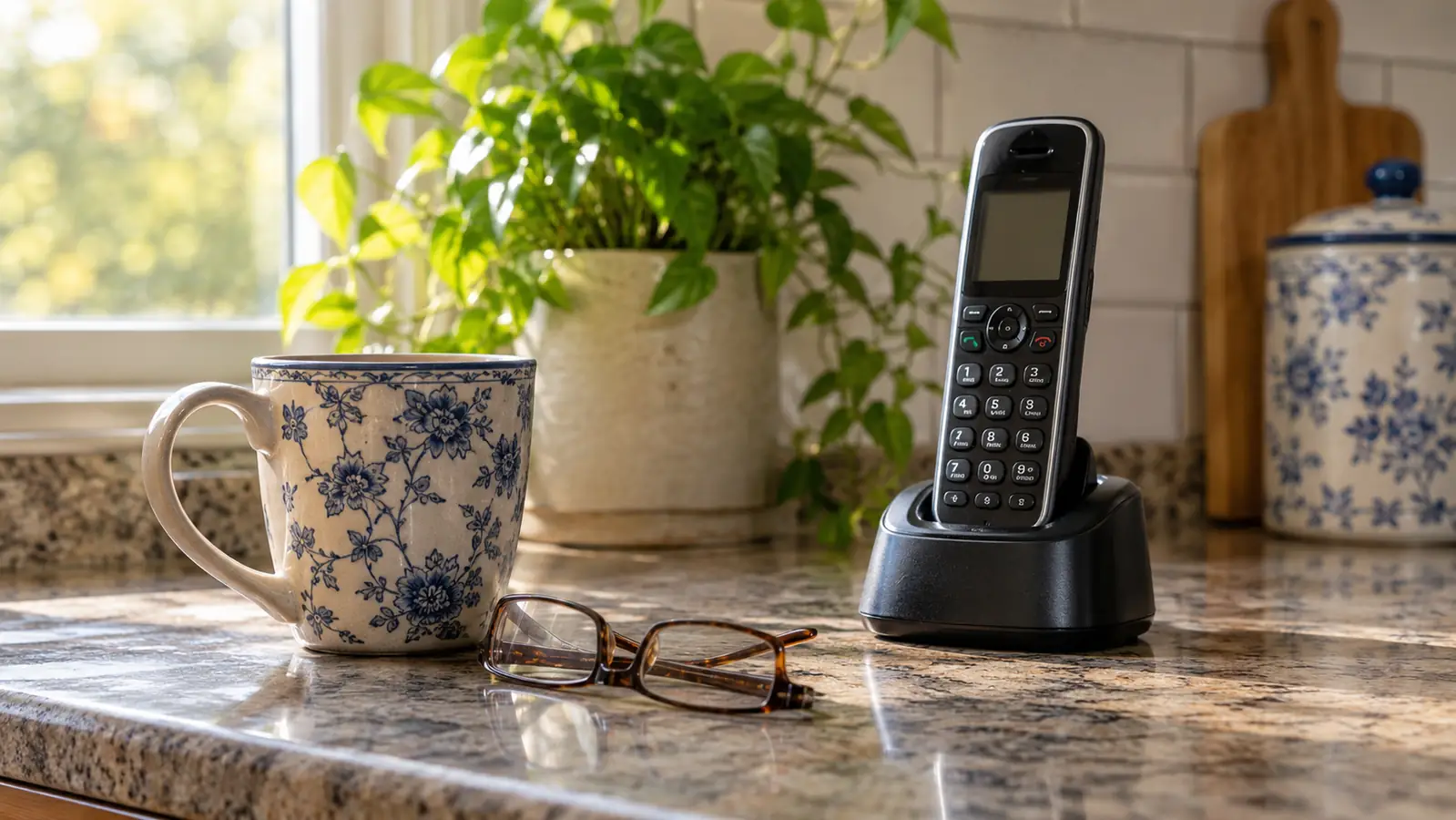
The Panasonic KX-TGM420W offers up to 40 dB of volume boost, a Slow Talk button, hearing aid compatibility and a ringer loud enough to hear from the next room. It is a cordless home phone, not a medical device.
Amazon Check Today's Price on Amazon →Volume boost up to 40 dB leaves headroom above normal
On my old handset the volume button had three clicks and I lived on the top one. When a soft-spoken caller came through, that top click still was not enough, and there was nowhere left to go. This phone boosts call volume up to 40 dB, which is a lot of room above a standard handset. I sit in the middle of the range now instead of pinned at the ceiling. When my daughter calls and talks low, I go up two clicks and she comes in clear.
Slow Talk spreads the words out in real time
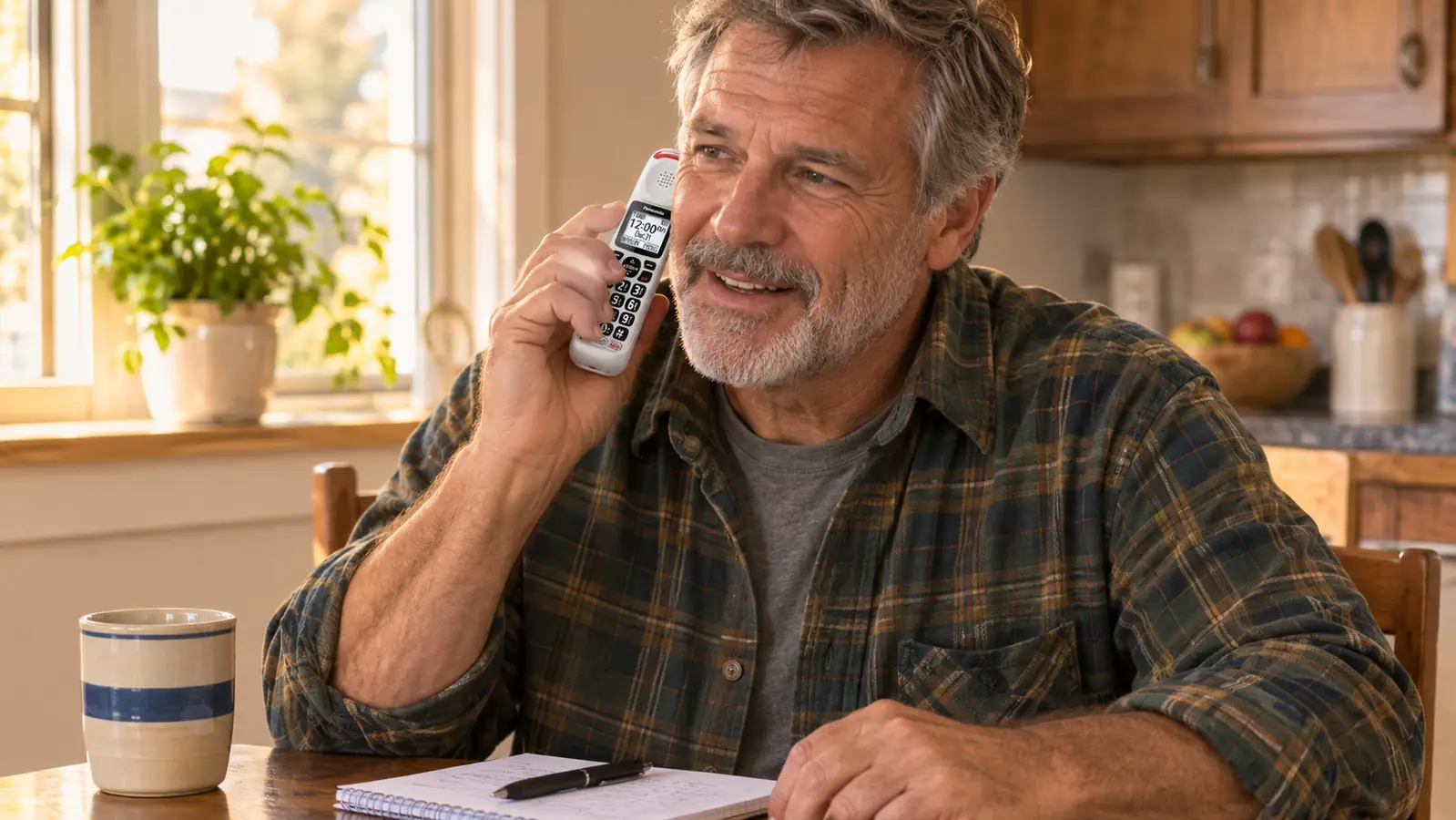
Slow Talk is a button on the handset that slows the speed of speech in real time, in both directions, while you are on the call. I use it with my grandson, who is nine and talks like somebody is timing him. Press the button and the words spread out enough that I catch the ends of them. Everything else about the call stays the same. It is not a recording and it is not a repeat, it just buys you a second to keep up, and I use it more than any other button on the phone.
A 100 dB ringer you can see, not just hear
The ringer on this handset goes to 100 dB and there is a visual alert that goes off with it. I keep the phone on the kitchen counter. With the garage door open I can still tell a call is coming in. The light matters more than the loudness, though. Carol can be watching something in the living room and she sees it before either of us hears it. My old phone rang at one volume, and that volume was polite.
Hearing aid compatibility so the phone and your aids work together
The handset is hearing aid compatible, which means it is built to work with an aid instead of fighting it. I do not wear aids yet. My audiologist told me that day is probably coming, and I would rather buy a phone once. If you already wear them, this is the line on the box to check first, because a loud handset that squeals when you hold it close is no better than a quiet one. Ask your audiologist about your own settings before you buy.
A large screen and backlit keypad you can read at nine at night
The screen is big enough that I can read a caller's name from arm's length without my glasses, which is new for me. The keypad lights up too, so when Carol's sister calls after dark I am not squinting at the buttons trying to find the talk key. Small thing, I know. But I dial fewer wrong numbers, and I have started checking the caller ID before I answer instead of grabbing the receiver and hoping.
Call block for 100 numbers and speed dial for the people who matter
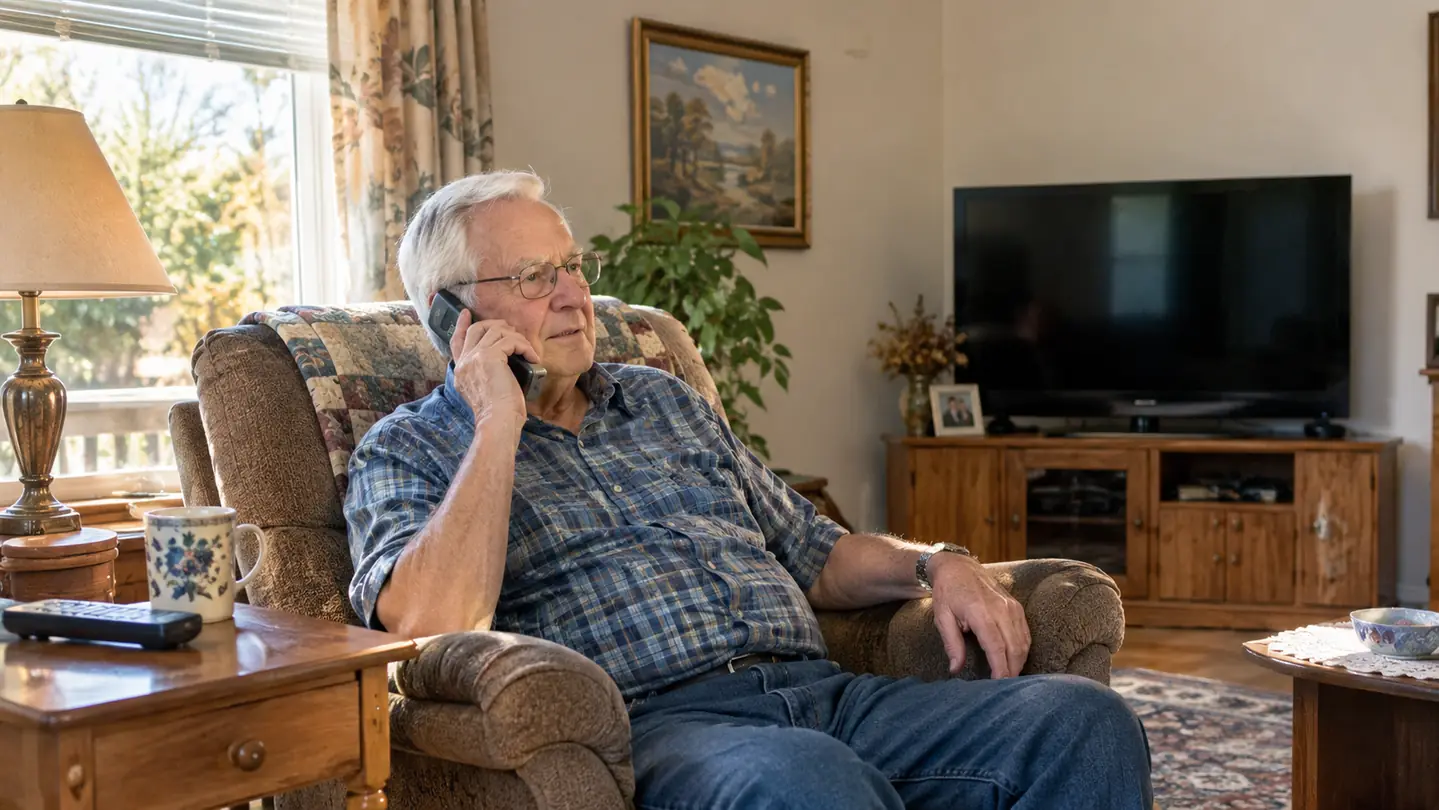
Two features I did not expect to use and now use every week. The phone blocks up to 100 numbers, so the extended warranty people and the vehicle coverage folks get blocked once and stay blocked. And there are 9 speed dial entries. Carol's cell is one, my son's is two. Nobody has to recite a phone number to me out loud anymore, which was never a smooth operation to begin with.
Expandable to six handsets so you stop walking down the hall
This kit is one handset, and the system expands to six if you want them. I started with the one on the kitchen counter and added a second for the bedroom, because a call at nine at night used to mean a walk down the hall. In a one-story ranch house with a long hallway, that walk gets old fast. If your house is laid out like mine, this changes the daily routine more than the volume does.
13 hours of talk time and 9 days of standby
Battery life is one of those things you do not think about until the handset dies in the middle of a sentence. This one is rated at 13 hours of talk time and 9 days of standby, on the two AAA batteries that come in the box. I drop it back in the cradle out of habit, so I am not the best test. But nine days of standby means the phone survives a week of me forgetting it, and that is the number that matters.
An answering machine that holds 17 minutes of messages
The built-in digital answering system records up to 17 minutes of messages. That sounds like plenty until you have a granddaughter who leaves three-minute messages. What I actually care about is that I can hear them. On the old machine I replayed every message twice and still guessed at half of it. Here I usually get it on the first pass, and when I do not, I turn the volume up and go again.
3-way conferencing so both grandkids can be on the line
The handset does a 3-way conference call. What that means at my kitchen table is that when both of the older grandkids are at their mom's and both want to talk, I can have them both on the line instead of one of them yelling from the background. I have used it maybe a dozen times in a year. Every single time it was worth having.
I press Slow Talk when my grandson calls. The words spread out enough that I catch the ends of them, and nothing else about the call changes.
What I'd Skip
Here is what I would skip. The very top of the volume range, for one. The phone goes up to 40 dB and I have never needed the last few clicks, though I am glad they are there for the day I do. The other thing I would skip is expecting this to fix your hearing. It is a handset that gets loud and slows speech down. It does not caption anything and it does not tell you what was said. If you are missing words because of how your ears work, get a hearing test first. That is the order I did it in and I would do it the same way again.
The other honest limit is the far end of the call. This phone makes your handset loud and clear. If your grandson is on a cell phone in a parking lot with the window down, no volume boost on earth fixes that. I have learned to ask people to call me back when they get home. That is not the phone's fault, that is just how a two-way call works. And this is one handset on a base. It is a home phone, not something you carry to the store.
Get your ears checked first. Then get a phone that can keep up.
I am not a doctor and I do not give medical advice. I am a retired electrician with a loud handset that made my family's calls easier to follow. If a home phone line is still how your people reach you, the Panasonic KX-TGM420W is the one sitting on my kitchen counter.
Amazon Check Today's Price on Amazon →