Here is the thing about hearing loss that nobody tells you. It does not take away sound. It takes away a specific slice of sound, and then it takes away your patience for asking people to repeat themselves.
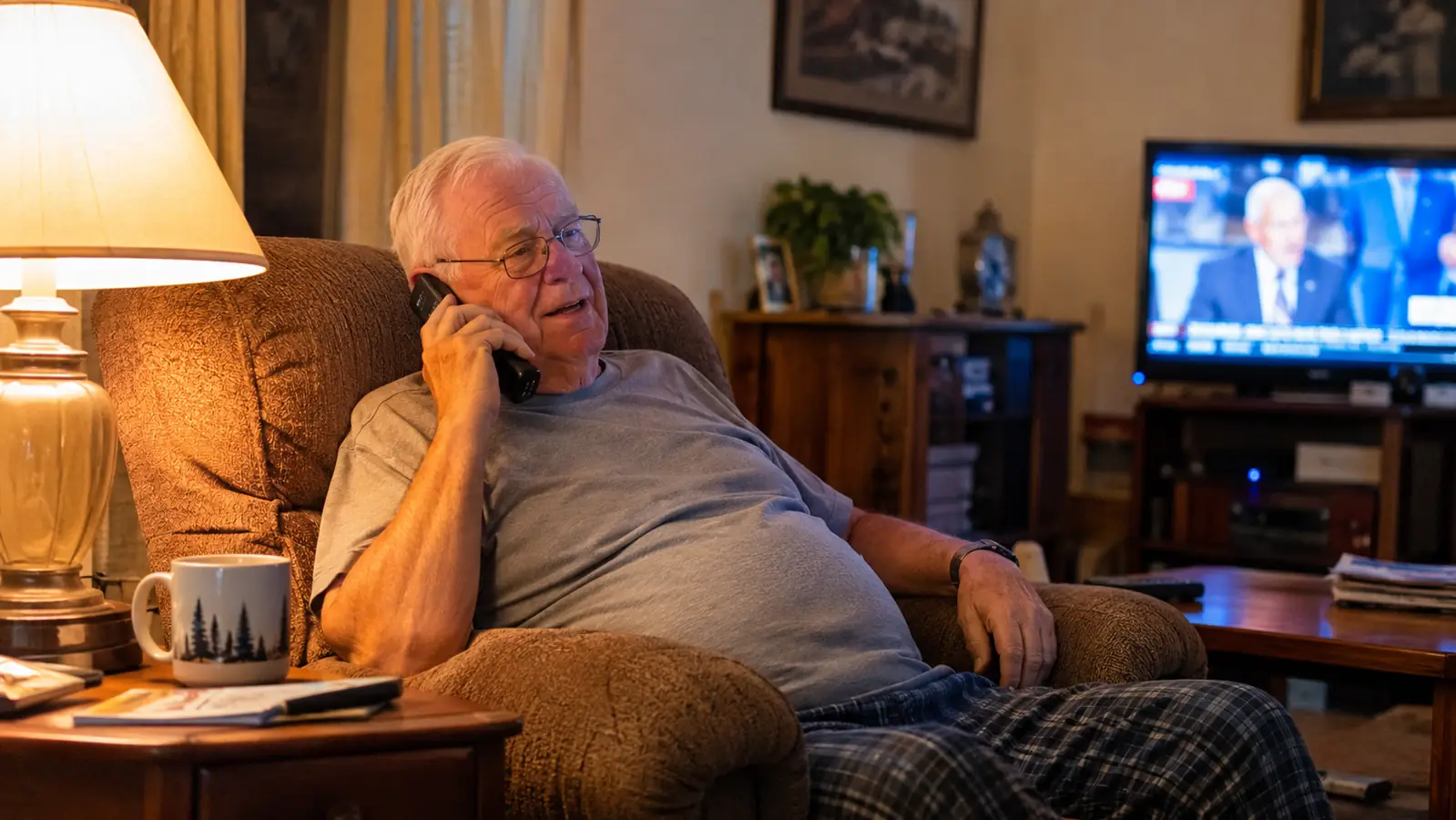
I spent 38 years as an electrician. Conduit, panels, job sites, generators running three feet from my head. An audiologist in Rolla told me at 66 that I had mild to moderate high-frequency loss in both ears, worse on the left. Consonants were the first to go. S, F, T, hard sounds. Women's voices and children's voices became the hardest things in my house to hear clearly, which is a tough break when you have four grandkids and a wife named Carol.
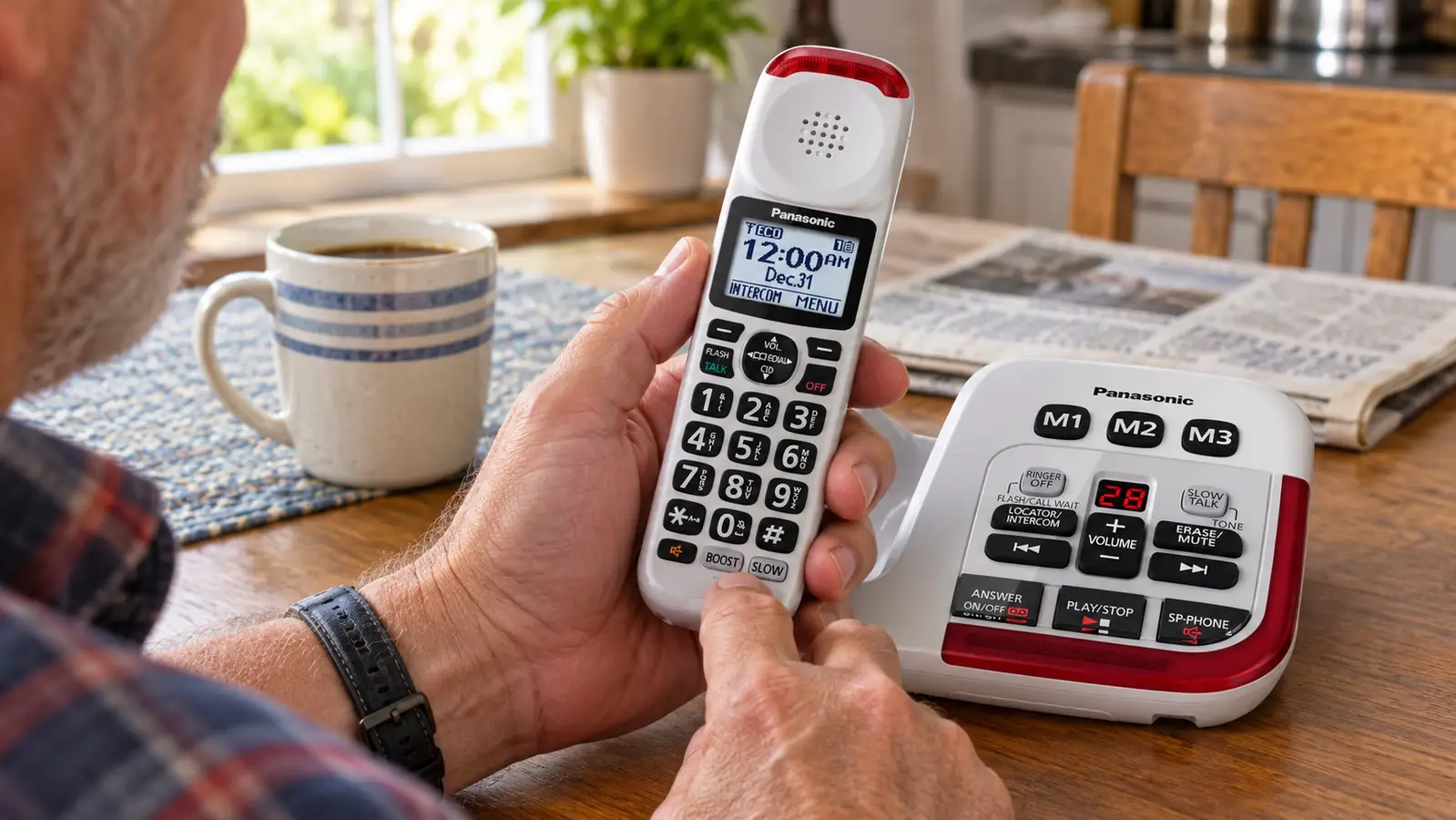
I fixed the television first. That is the obvious one. Then I got to the telephone, which turned out to be the piece of hardware I had been quietly avoiding for about six years. I bought the Panasonic amplified cordless phone, the KX-TGM420W, back in the spring. It is a white single-handset landline phone with a 40 dB volume boost and a Slow Talk button. I want to tell you what that actually did at my kitchen table, because the product listing will not.
Before I do, understand what the phone problem really was. It was not that calls were too quiet. It was that calls were quiet and fast at the same time. My granddaughter Ellie is nine and she talks like a auctioneer. She gets excited and the whole sentence runs together and I catch maybe every fourth word, and then I say what, and she says it again, and now she is annoyed and I am embarrassed and the call is over in ninety seconds.
It was not that calls were too quiet. It was that calls were quiet and fast at the same time.
That is the pattern. You stop calling. Not on purpose. You just start letting Carol make the calls, and pretty soon you are the guy who gets handed the phone instead of the guy who picks it up. That went on for longer than I care to admit.
I did not know a phone could be this loud until I tried one
The Panasonic KX-TGM420W boosts call volume up to 40 dB and includes hearing aid compatibility, a large backlit screen, and a Slow Talk button that stretches speech instead of just turning it up.
Amazon Check Today's Price on Amazon →The Two Buttons That Did the Work
The volume boost is the part everybody understands. Up to 40 dB, which in my living room means I can hold a normal conversation on a handset instead of pressing it to my skull like I am trying to hear through a wall. The difference is not subtle. I set it where I wanted it and left it there.
The Slow Talk button is the part I did not expect to use. You press it during a call and it stretches the speed of speech in real time. Not faster, not slower overall, just slower. I tested it on Ellie. She chattered through her whole Saturday report, softball, the dog, a friend whose name I never caught, and I pressed Slow Talk about thirty seconds in and it was like somebody took their foot off the gas. I heard the consonants. That is the whole thing, right there. I heard the S sounds.
I will be straight with you about it. Slow Talk makes the other person sound like they are being careful with you, which takes some getting used to. It is not magic and it does not fix a bad connection. If my son is on a cell phone in a parking lot, it is still a cell phone in a parking lot. What it fixes is the speed, and the speed was most of my problem.
What Else Made a Difference
The ringer is loud. 100 dB, and it flashes a visual alert so you can see it ringing from across the room. Carol can hear the phone fine and even she likes that, because I am not the only one in this house who misplaces a handset.
The screen is large and the keypad is backlit, which matters more than I expected. I used to put on my reading glasses to dial. Now I do not. It also holds nine speed dial entries, and I have three of them filled with the grandkids. Ellie is speed dial two. That is not a small thing when you are standing in a kitchen with a handset in one hand and a stove going.
It blocks up to 100 numbers, which I have used more than I thought I would. The answering machine records about 17 minutes and the phone holds a charge for up to 13 hours of talk time, nine days on standby. It is expandable to six handsets if you want one in the bedroom. It also has a headset jack and three-way conferencing, neither of which I use, but I am telling you they are there. I have not had a landline call drop in six months.
One honest complaint: the handset is a little thicker than the old one it replaced, and the buttons take a firmer press than my old phone did. Not a deal breaker. Just not the same animal.
What I'd Tell You If We Were Sitting at My Kitchen Table
I would tell you the phone is not the first thing to fix and it is not the last. If you have not had a hearing test, get one. I am not a doctor and I am not going to pretend to be one. An audiologist can tell you what you are actually missing, and that knowledge changes what you buy. I waited until 66 to find out and I wish I had gone at 60.
I would tell you that the people in your life have already adjusted to your hearing loss in ways you probably do not notice. They talk louder. They face you when they speak. They repeat things without being asked. It is a kindness, and it is also a signal that you should be doing your part.
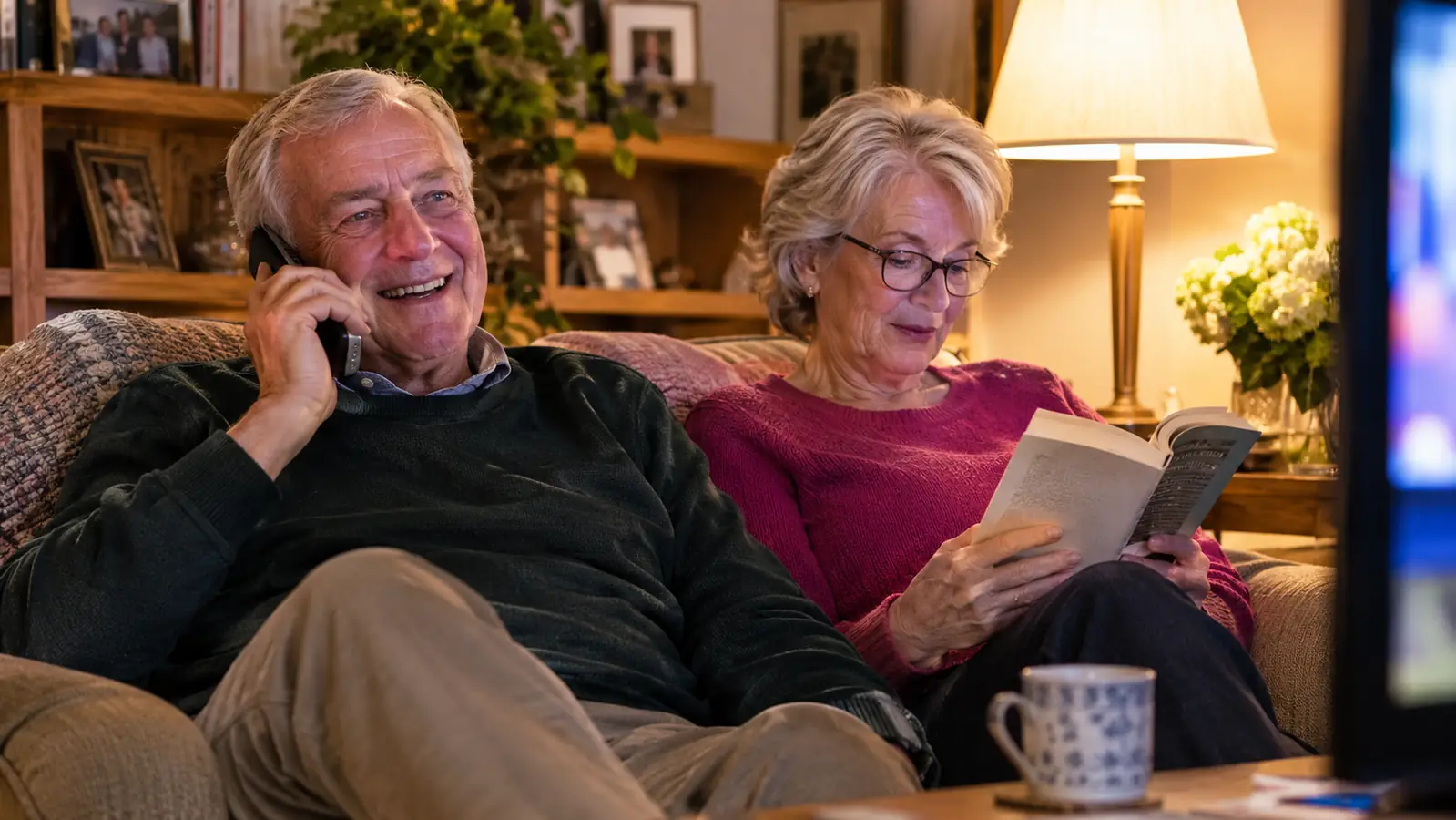
And I would tell you that the phone was the last thing I fixed and the one that changed the most, because it was the one I had given up on. There is a difference between a quiet television and a phone call you cannot follow. One is an annoyance. The other one slowly takes you out of your own family's daily conversation. Ellie calls now and I pick it up. We talk about softball. I catch her name, I catch the dog's name, and most of the time I catch the friend whose name I never used to get at all.
The call you have been letting someone else answer
The Panasonic KX-TGM420W: up to 40 dB volume boost, Slow Talk speech control, 100 dB visual ringer, hearing aid compatible, large backlit screen and keypad, nine speed dials, 17 minutes of recording, up to 13 hours of talk time on a charge.
Amazon Check Today's Price on Amazon →