
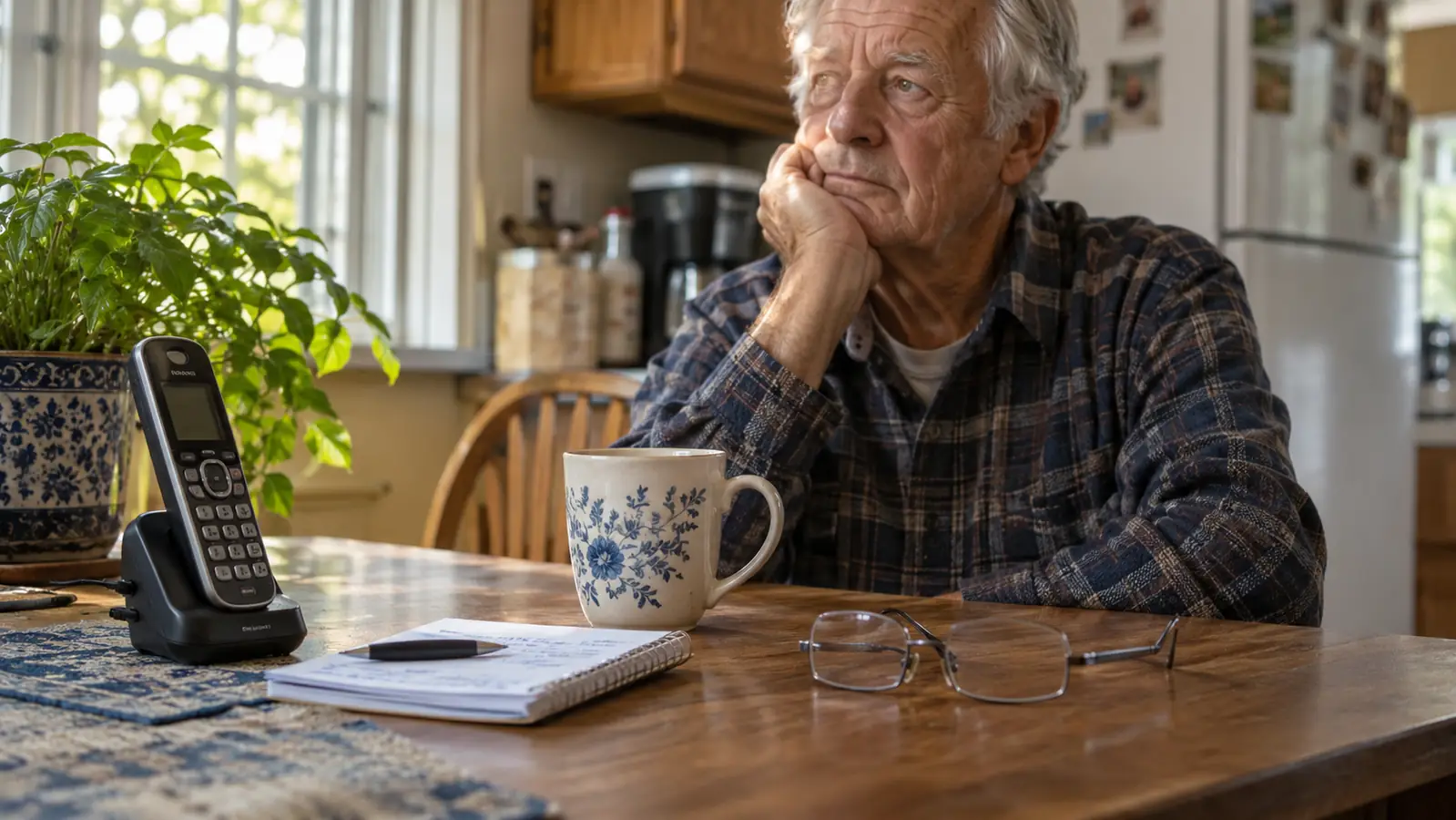
The phone rang at 7:40 on a Tuesday, and I let it ring twice. That is not because I am rude. It is because I knew I would spend the first thirty seconds asking whoever it was to repeat themselves. My left ear is worse than my right, but both ears have trouble with consonants. A grandchild says three words and I catch one. Carol can hear the same call from the kitchen and tell me what I missed, which is a fine system until she is not home.
I am 71, a retired electrician in Rolla, Missouri. Thirty-eight years around job-site noise did their damage, and an audiologist told me at 66 what I already suspected. I am not a doctor. I am not an audiologist. What follows is what I did at my own kitchen table, with my own phone, after a lot of calls that went badly. The phone I settled on is the Panasonic Amplified Cordless Phone, model KX-TGM420W. It is a cordless handset with a volume boost rated up to 40 dB, a Slow Talk button, and a ringer rated at 100 dB. Those three things are the reason I can now answer a call without bracing for it. I have tried other amplified phones. Some were louder but harder to hold. This one I can use without thinking about it after a week.
If you dread answering the phone, start with a phone built for the job
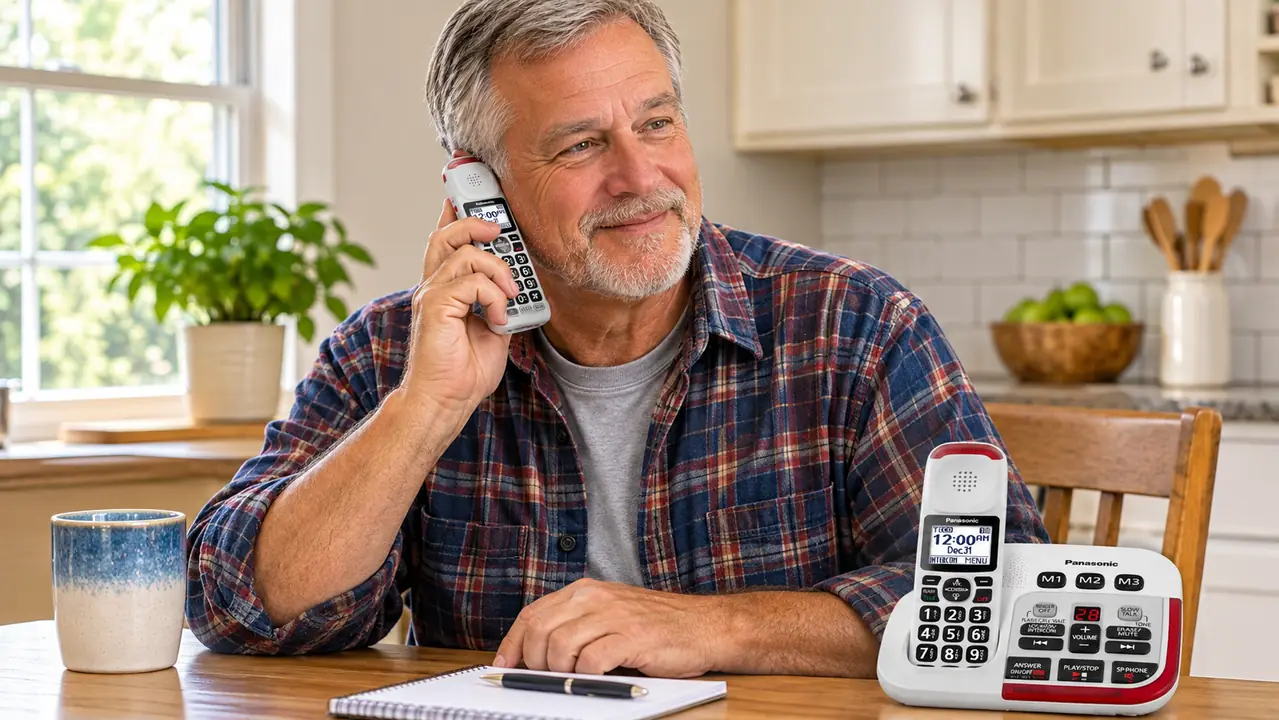
The Panasonic KX-TGM420W puts a volume boost rated up to 40 dB and a Slow Talk button on the handset. I keep the base beside my recliner so I can answer before the caller gives up.
Amazon See the Panasonic KX-TGM420W on Amazon →Step 1: Put the base where you actually sit, not where the wall jack is
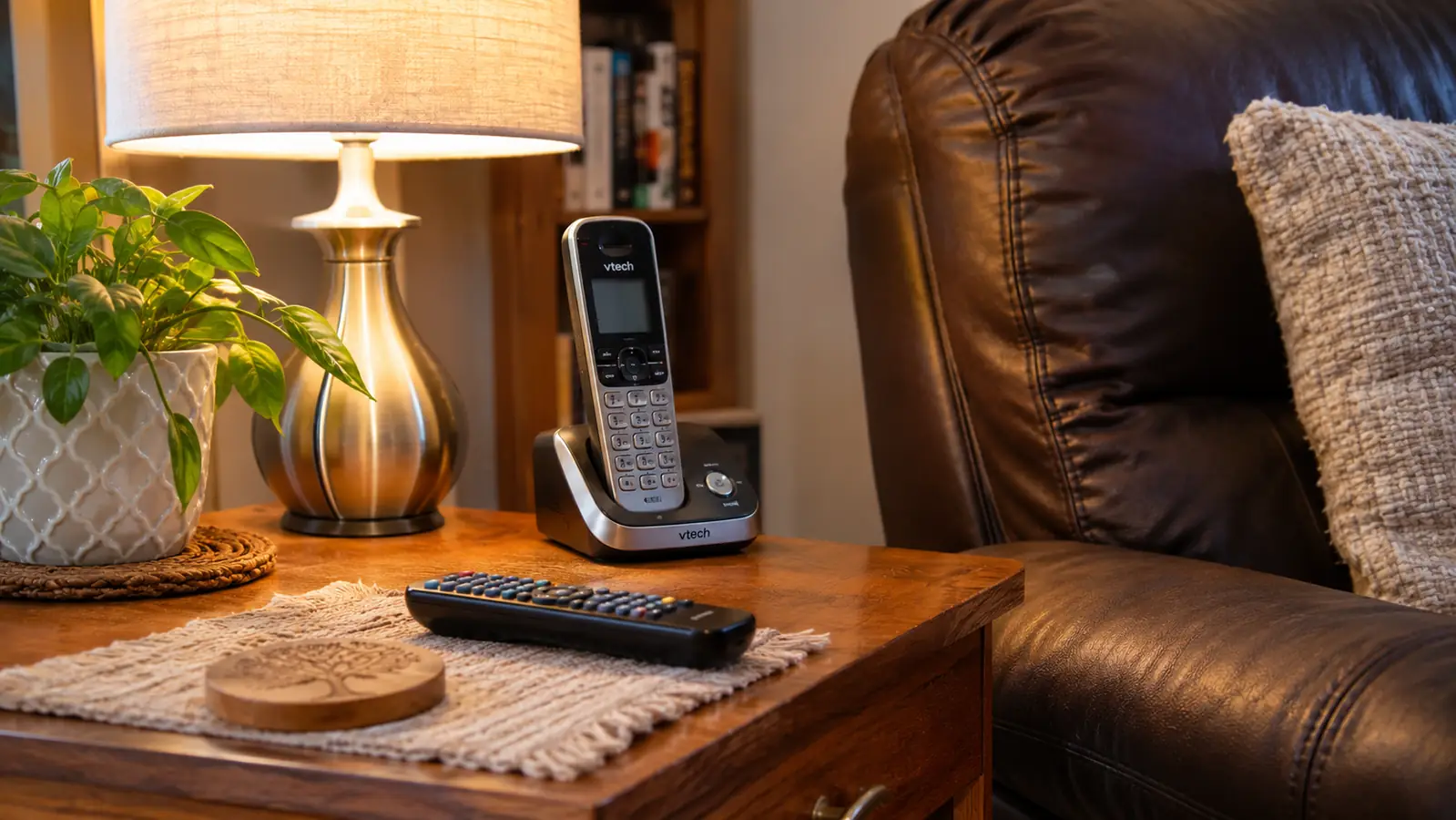
The first mistake I made was leaving the base in the hall where the old phone lived. That is where the jack was, and I figured the phone belonged there. But an amplified phone only helps if the handset is within reach when the call comes. I moved the base to the side table beside my recliner. That one move did more for my calls than any setting. Now I can pick up without standing up, and I can see the screen before I answer. The KX-TGM420W is a DECT 6.0 cordless phone, and it comes with one handset. The listing says it can expand to six handsets if you want more than one in the house.
The battery numbers matter more than I expected. The listing says up to 13 hours of talk time and up to 9 days of standby. I do not leave the handset off the base on purpose, but I have gone a full afternoon in the kitchen and the shop without the battery warning coming on. The phone uses two AAA batteries, and they are included. That sounds like a small thing until you get a new phone home and find out you need to make a separate trip for batteries. I keep a spare set in the drawer now, because the first time the battery went low I was in the middle of a call from the doctor's office.
One more thing about placement. Keep the base away from the television if you can. I had a cheap cordless years ago that buzzed near the TV, and I never trusted it. The Panasonic has been clean on that side table. The screen is large enough that I can read it without putting on my reading glasses, which is not a sentence I could write about my old phone. If you have a recliner and a side table, that is your spot. Do not make yourself walk to the hall for a call you are already nervous about.
Step 2: Learn the volume boost in a quiet room before you need it
I am the kind of person who waits until the water is running in the sink and then tries to find the right knob. Do not do that with a new phone. Sit in a quiet room, call someone patient, and find the volume boost. On the KX-TGM420W the boost is rated up to 40 dB. That is a big number. It is not the same as turning the volume up one notch on a normal phone. When I first hit it, Carol's voice was loud enough that I pulled the handset away from my ear. Now I use it on purpose, not by accident. The first time you use it, do it with someone who will not laugh if you say the wrong thing.
The 40 dB boost is the main tool, but it is not the only one. The handset also has a large screen and a backlit keypad. I mention the keypad because I make most of my calls after dark, and the old phone had buttons I could not see without turning on the kitchen light. The backlight means I can dial a number from the recliner without waking the house. I can also read the screen from arm's length, which is more than I can say for the thermostat. That is not a feature I would have asked for. It is one I use every night.
A word of caution. More volume is not always better. If the caller is in a noisy room, the boost can make the background noise louder too. I use the boost for the first minute, then drop back if the call is clear. That sounds fussy, but it is no different from adjusting the mirror in the truck. You set it once for the conditions, then you leave it alone. The goal is to understand the call, not to win a volume contest.
Step 3: Use Slow Talk when the call is about numbers, names, or directions
The Slow Talk button is the feature I did not expect to use. It slows the speed of speech in real time. I use it when one of the grandkids calls and starts talking before I have the handset at my ear. I use it when the pharmacy reads back a prescription number. I use it when Carol's sister calls from Illinois and gets to telling a story at highway speed. The button is on the handset, so I do not have to hunt through a menu while someone is talking.
That last part matters. When I lose the first sentence, I am behind for the rest of the call. Slow Talk gives me a way to catch up without saying, for the third time, that I did not hear. I still ask people to repeat themselves. I just do it less. If you are the kind of person who nods along and hopes the meaning shows up later, this button is for you. It does not make the caller smarter. It makes them slower, which is what I need. If the caller is giving an address or a confirmation number, Slow Talk is the difference between writing it down once and calling back to ask again.
The phone also has a digital answering system with up to 17 minutes of recording capacity. I set it up because I was missing calls when I was out in the shop. Now I can come in, see that there is a message, and play it back at a volume I can hear. The machine is not a substitute for a person, but it beats finding a scrap of paper with a number I cannot read. If you are going to miss calls, you should at least be able to hear the messages.
Step 4: Let the ringer and the screen do some of the work before you pick up
My old phone rang like a cricket under a bucket. I would hear it, but I could not tell where it was coming from. The KX-TGM420W has a visual ringer and a ringer rated at 100 dB. I have the visual alert on, so I see the call as well as hear it. That combination is what makes the phone usable from the recliner. I do not have to guess whether the sound was the phone or the dryer. When Carol is in the kitchen and I am in the living room, we both know a call is coming in.
The screen is large, and the keypad is backlit. I already mentioned the keypad, but it belongs here too, because the whole point is to reduce the number of small fumbles between the ring and the hello. The phone also has a call block for up to 100 numbers. I have used it. I am not going to pretend that I understand every robocall. I do know that I got fewer of them after I started blocking the repeat offenders. The block list is not a cure for spam, but it is a way to stop the same number from getting through twice.
I also set up the speed dials. The listing says nine speed dials, and I used most of them for family and the doctor's office. The grandkids think it is funny that Grandpa has them on a button. I think it is funny that they can remember twenty passwords and not that I need a minute to find my glasses. The speed dials save me from dialing a long number while the caller is already talking. That is the sort of small help that adds up over a week.
Step 5: Practice with a patient caller and give it two weeks
The first week with any new phone is a bad test. You are learning the buttons, the caller is learning your new number, and nobody is at their best. I asked Carol to call me from the kitchen every evening for a week. We practiced the volume boost. We practiced Slow Talk. We practiced what I would say when I missed the first sentence. That last one is the real skill. I say, start over and tell me the reason for the call. Most people will do it. By the second week, I was answering without thinking about which button to press.
The phone is hearing aid compatible, which matters if you wear aids. I do not, so I cannot tell you how that pairing works in your case. I can tell you that the whole unit is listed at 1.1 pounds. I have held the handset through a forty-minute call with my daughter without my hand cramping. If you wear hearing aids, get your audiologist to check the settings before you decide the phone is no good. I am not qualified to give that advice, but I am qualified to say that a phone call is a bad place to experiment.
Get a hearing test. Ask questions. Then come home and practice. I know that sounds like a lot of work for a phone call. It is less work than pretending you heard something you did not, and then finding out three days later that you agreed to bring the wrong thing to Sunday dinner. A phone with a volume boost and a Slow Talk button is a tool. You still have to learn how to use it.
What Else Helps
A few other things made a difference. The phone can expand to six handsets, so Carol and I could put one in the kitchen and one in the bedroom if we wanted. The 3-way conference feature means we can both be on a call with one of the kids, which is better than me repeating everything to her after I hang up. The headset compatibility is there if you already use a headset. I have not tried it, so I will not pretend to know how it feels on a long call. If you have a big house, that second handset is worth considering.
The answering system holds up to 17 minutes of messages. That is plenty for a household like ours. The phone also has a digital answering system, so there is no tape to rewind. If I miss a call, I can see the message count on the screen. I check it when I come in from the shop. The standby time is listed at up to 9 days, and the talk time is up to 13 hours. Those numbers are not why I bought the phone, but they are why I stopped thinking about the battery.
None of this replaces a hearing test. I want to be plain about that. A phone with a 40 dB boost is a tool, not a treatment. It helps me hear the call better. It does not fix my ears. If you have sudden hearing loss, pain, or a difference between ears that is new, call your doctor. If you have been putting off a test because you think you can get by, get the test. Then get a phone that makes the everyday calls easier. That is the order I would do it in. That is not a sales pitch. That is what I would tell a neighbor.
The phone did not cure my hearing. It stopped making me feel stupid for missing the first sentence of every call.
You do not need a perfect phone. You need one you will actually answer.
The Panasonic KX-TGM420W has the volume boost, the Slow Talk button, and the loud visual ringer I use every day. Start with the phone, then get your hearing checked. That is the plain version.
Amazon See the Panasonic KX-TGM420W on Amazon →