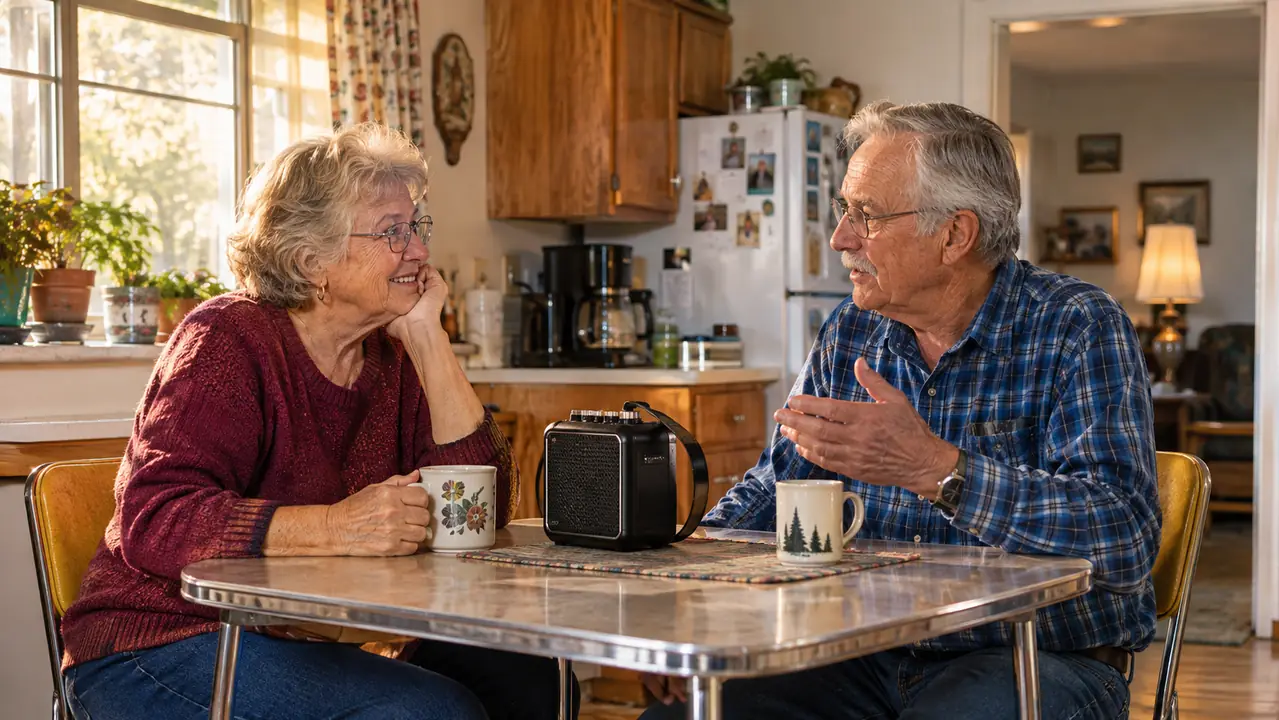
Carol and I eat supper at the same kitchen table we bought in 1988. It seats four, but most nights it is just the two of us, and for a couple of years there it was the quietest room in the house.
Not because we were sore at each other. Because I had quit following her. She would say something from the stove with her back turned, and I would catch the shape of it and none of the words, and I would nod. Nodding is a bad habit. It gets you caught. I am Vernon Tisdale, I spent 38 years pulling wire around job-site noise, and at 66 an audiologist in Rolla told me what I already figured: mild to moderate high-frequency loss in both ears, worse on the left. Consonants go first. Women's voices and kids' voices go right after. What finally helped at that table was not a hearing aid. It was a neck-worn amplifier from Williams AV, the Pocketalker Ultra, and I have run it through enough suppers to tell you plainly what it does and does not do.
The little amplifier that got me back into the conversation
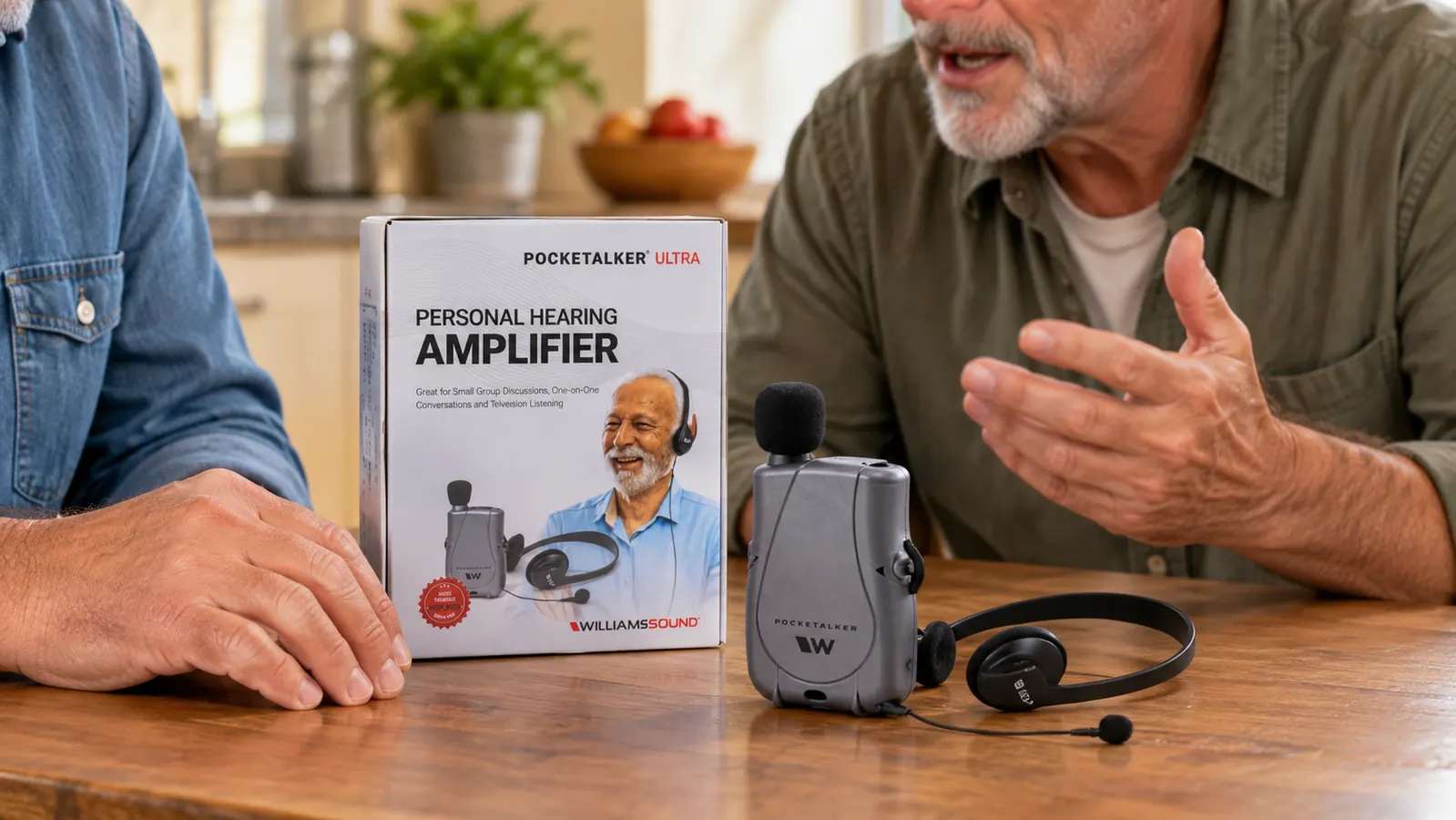
It is a two-knob box on a lanyard. No pairing, no programming, no phone app. That is the whole reason it works for me.
Amazon See the Williams AV Pocketalker Ultra on Amazon →It makes the person across the table louder, not the whole house
This is the part people get wrong about hearing loss. Turning up the television does not turn up Carol. It turns up the refrigerator hum, the furnace, and the clock on the wall along with her. The amplifier is different. I set its microphone near her place at the table and her voice arrives at my ear ahead of everything else in the room. She talks at the volume she always talked at. I hear it. The house stays quiet.
The tone knob pulls the consonants back up where I can use them
Volume alone never fixed me. I could hear Carol fine and still not know what she said, because the s and t and f sounds live up high where my ears quit working. The second knob handles that. I turn it until her voice sounds like her voice again instead of a mumble with vowels in it, and I leave it alone after that. It took me about three suppers to find the spot. Now I do not touch it.
The plug-in microphone does the leaning so I do not have to
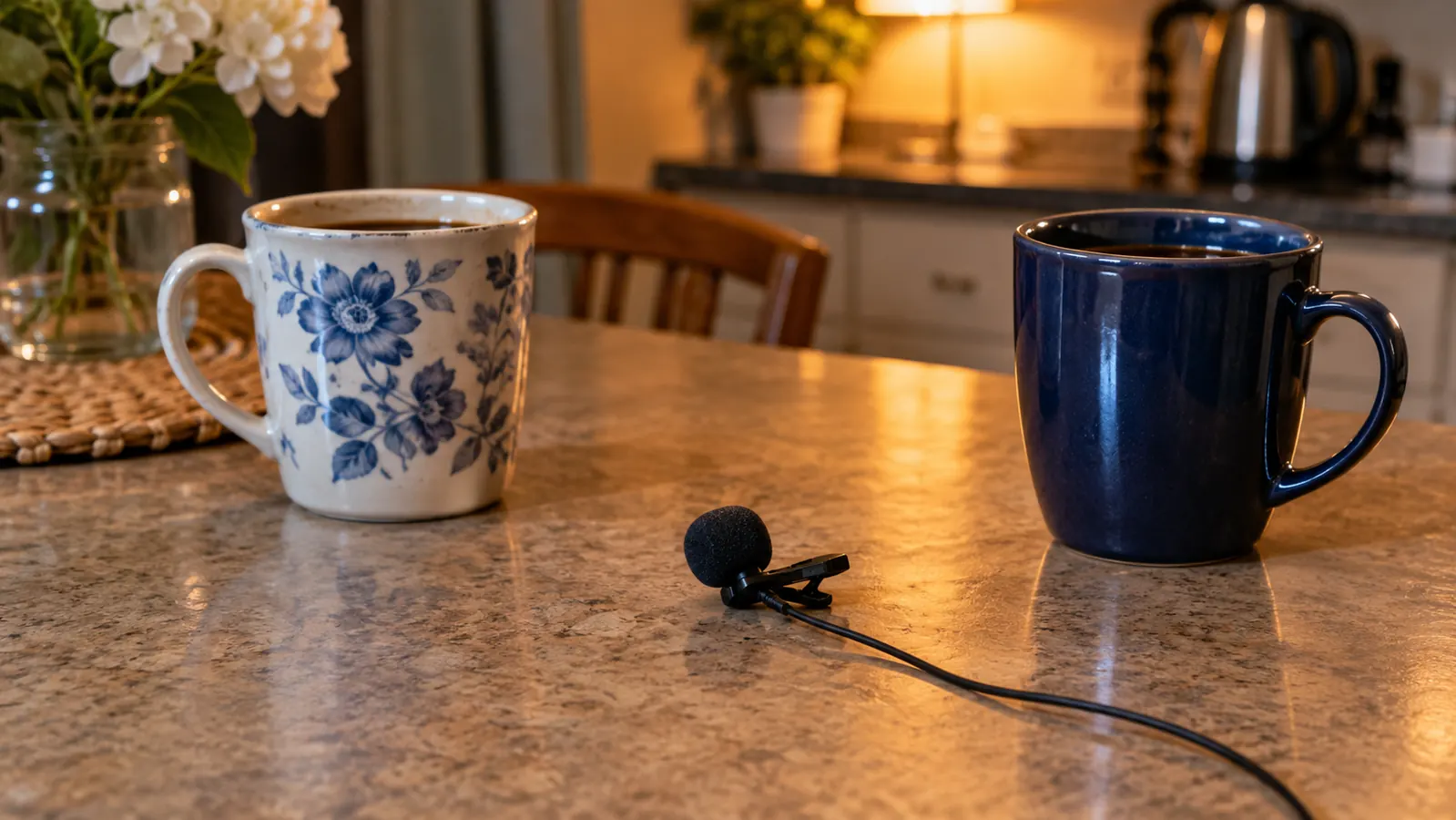
The unit comes with a small microphone on a cord, and that microphone is the whole trick. It sits out on the table between us instead of hanging off my shirt, so it hears Carol from two feet away rather than from across the room. Before this I was doing the old routine, cupping my hand behind my ear and tilting my head like a man trying to hear a train coming. Williams AV put the microphone where the talking actually happens.
A 12-foot cord runs to the television so the evening news stops being a guess
The box comes with a long cord meant for the TV, and eleven feet is about the distance from my recliner to the 55-inch set. That cord was the second thing that changed my evenings. News anchors talk over music and the music wins. With the cord run from the set to the amplifier, the dialogue comes through the headphones and the background score stays behind it. I hear the weather the first time it is given now, not the second.
Automatic gain control keeps a slammed cabinet from hitting me in the ear
One thing I did not expect. When a sound jumps, a dropped pan or a car door out front, the amplifier does not slam it into your head. It has automatic gain control that holds the level steady. I noticed it the first week because I flinched out of habit and then did not need to. For a man who already has trouble in one ear, not getting stabbed by a sudden noise is worth more than it sounds.
She talks at the volume she always talked at. I hear it. The house stays quiet.
Two AAA batteries run up to 200 hours, which is about a month of suppers
It takes two AAA batteries, and the listing says up to 200 hours. Mine runs on suppers, church, and the ball game, so call it an hour and a half a day, and I am changing batteries about when I think about it, not when it dies mid-sentence. I keep a pack in the kitchen drawer next to the matches. Dead batteries during a grandkid's phone call is the only failure mode that has ever annoyed me.
It hangs around your neck on a lanyard, so it is always where you left it
This matters more as you get older and I will not pretend otherwise. It wears around my neck, and there is a clip on it too if I want it on a belt or a shirt pocket. I am not hunting for a case on the end table while Carol is already three sentences into something. The thing about a device that has to be put in to work is that it only works if you can find it.
A folding headphone and a mini earbud, so you can pick by the room
The kit comes with two ways to listen: a folding set of headphones and a small earbud. At the table I use the earbud, one ear, so I still hear the kitchen around me and I am not sealed off from my own house. In the recliner with the TV cord, I use the headphones. Simple as that. Two options, no settings to remember, and I switch between them without thinking about it anymore.
The 20 Hz to 20 kHz range keeps voices sounding like people
I am an electrician, not an audio man, so here is the plain version. That range covers what human voices actually produce, top to bottom. What that means at my table is that Carol does not come through sounding like a drive-through speaker. She sounds like Carol, a little louder and a little clearer. When an amplifier makes your wife sound like a machine, you stop wearing it. This one I forget I have on.
A five-year warranty on parts and labor from a Minnesota company
Williams AV has been in Minnesota a long time, and this unit carries a five-year warranty on parts and labor, with 90 days on the accessories. I have had cheap amplifiers before, the kind you order and forget. This was built by a company that expects to hear from you again. In two years I have not had a reason to call them, and that is the report I would most want to give.
What I'd Skip
Two things, and I mean them. First, this is not a hearing aid and I am not an audiologist. If you have not had a hearing test, go get one before you buy anything. An amplifier makes everything louder. A hearing aid is fitted to your ears and your loss, and for some folks that is the right answer, not this. Second, a loud room still beats it. Thanksgiving with nine people talking at once, or a restaurant with the dishes clattering, and the microphone picks up all of it. It shines at a quiet table with one or two people. That is where it earned its place in my house, and I would rather tell you the limit than sell you past it.
Start with one supper and see for yourself
Charge nothing, pair nothing. Two AAA batteries, one knob for volume, one for tone. If it does not help at your table, send it back.
Amazon Check Today's Price on Amazon →