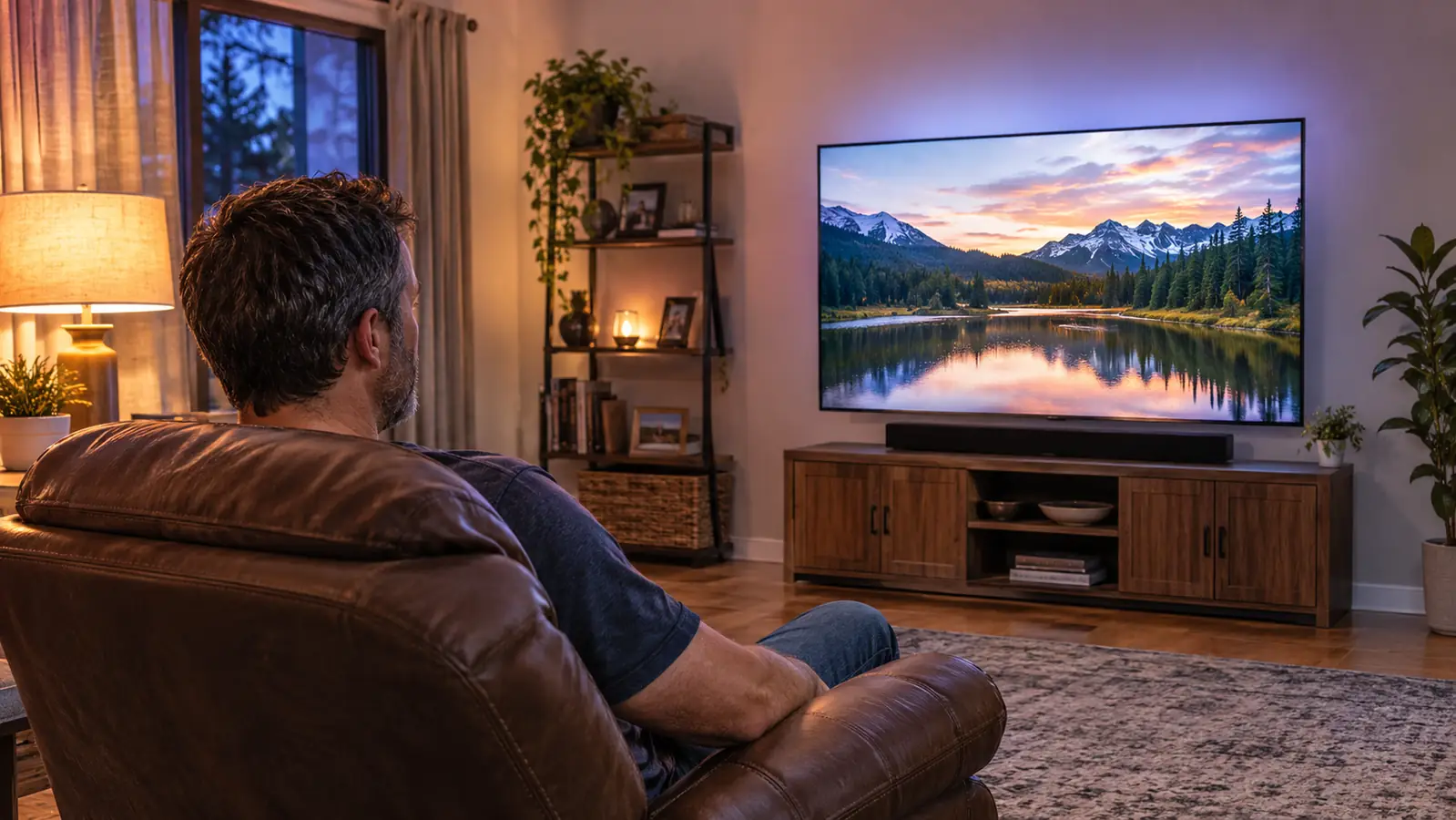
You know the scene. The evening news comes on, the anchor starts talking, and you catch every third word. Something about a city council vote. Something about a bridge closure. Then the weather segment begins, the music swells underneath the voice, and the whole thing turns into a mumble. You reach for the remote and bump it up two clicks. Carol reaches over and takes it back down two clicks. Nobody says a word about it, but everybody in the room knows what just happened.
I am Vernon Tisdale. I am 71, a retired electrician in Rolla, Missouri, and I have mild to moderate high-frequency hearing loss in both ears, worse on the left. Thirty-eight years of job-site noise did that, and an audiologist confirmed it when I was 66. Consonants go first for me. Women's voices and children's voices on the phone are the hardest. TV dialogue sitting on top of background music is the everyday problem. I bought the ZVOX AccuVoice AV157 for our 55-inch set in the living room, partly because Carol was tired of the volume and partly because I was tired of guessing. What follows is the order I would do things in if I were starting over, and it does not start with the soundbar.
Twelve levels of voice boost. I only ever needed six.
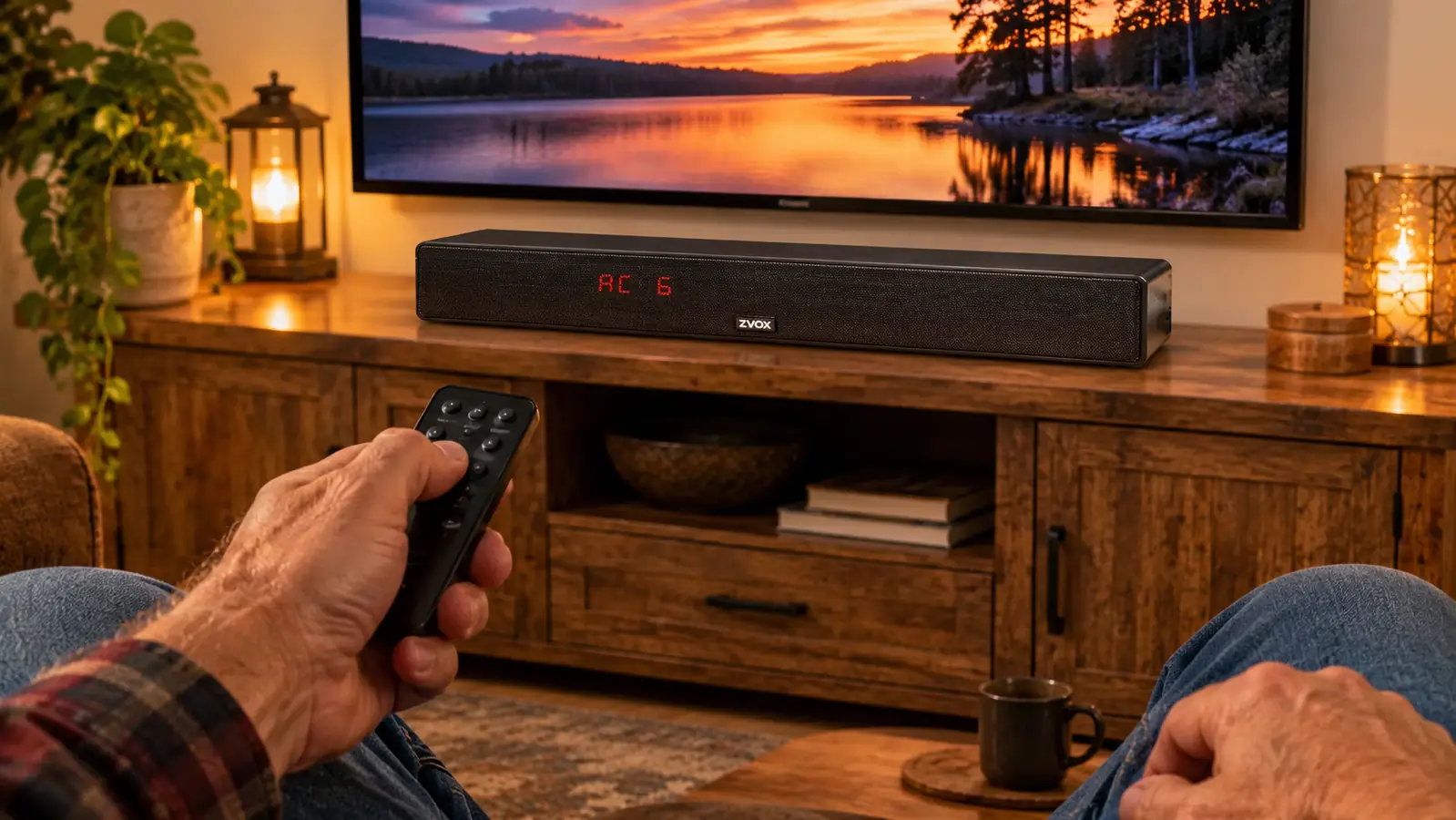
The ZVOX AccuVoice AV157 sits on our TV stand under the 55-inch set, about eleven feet from my recliner. It has 12 levels of voice boost and a Supervoice mode that pulls background noise down so voices come forward. It is a wired unit, run with a remote and a cord, and it connects over Toslink optical or an analog cable. All the cables come in the box.
Amazon Check Today's Price on Amazon →Step 1: Get Your Hearing Checked Before You Buy Anything
I know that is not what you clicked on. But I would be doing you no favors by skipping it. I am not an audiologist and I do not play one on the internet. I am a retired electrician who spent 38 years around saws, compressors, and hammer drills and did not wear plugs nearly as often as he should have. I put the test off for five years because I figured I knew what it would say. I was wrong about the details.
What the test actually gave me was a map. High-frequency loss, both ears, left side worse. That explained a stack of small things at once. Why Carol sounded muffled to me and perfectly clear to herself. Why the grandkids on FaceTime were harder to follow than my son on a regular phone call. Why I could hear the ball off the bat at a Cardinals game but not the color man describing it.
Here is why it matters before you spend a dime on a soundbar. A dialogue soundbar boosts the range where consonants live, and that is where most of us lose the most. If your loss sits somewhere else, or if one ear is far worse than the other, a soundbar alone may leave you flat, and a hearing aid or a TV listening device may be the tool that does the job. Buy the soundbar either way if you like, but know what problem you are actually solving. That is the difference between a fix and another gadget in the closet.
Step 2: Find Out What Audio Outputs Your TV Actually Has
This is the step people skip, and it is the step that decides whether any of this works. The ZVOX AV157 is a wired soundbar. It hooks to your television one of two ways: a Toslink optical cable, or an analog connection over 3.5mm or RCA. The listing says plainly that it is not compatible with TVs that lack audio outputs. So before you order anything, go find out which kind of output you have.
Take a flashlight and get down behind the set. Look for a small square port with a little shutter inside it, about the size of a pencil eraser. That is optical. Look for a round jack like a headphone hole. That is 3.5mm. Look for a pair of round jacks, one red and one white. Those are RCA. Our 55-inch set has an optical output, and it took me four minutes on my knees with a light to confirm it.
If your television has none of those, stop right here. A soundbar cannot fix a set that has no way to send audio out. That is not a knock on the product, it is just wiring, and I have seen more than one person buy a soundbar for a TV that had nothing to plug it into. Save yourself the return shipping.
Step 3: Put It Where the Sound Reaches You, Not the Wall
Ours sits on the TV stand, directly under the screen. It measures 19.75 inches wide, 4 inches tall, and 7.75 inches deep, and it weighs 3 pounds, so it does not need a shelf rated for anything in particular. It came out of the box, went onto the stand, and has not moved since.
The important part is the line between the soundbar and your chair. Mine is about eleven feet, straight across the living room, with nothing between except a coffee table that sits low enough not to matter. If you can put the bar in front of you rather than tucked behind a lamp or inside a cabinet, do that. Sound does not turn corners in a helpful way, and the boost settings only help if the sound is actually reaching your ears.
Then go into your television's sound menu and turn the TV's own speakers off. Run one or the other, not both. Two sets of speakers playing the same dialogue a fraction of a second apart makes voices sound hollow, like somebody talking into a tin can, and you will blame the soundbar for a problem the TV is causing.
Step 4: Work the Voice Boost Up Slowly, and Save Supervoice for the Hard Stuff
The AV157 gives you 12 levels of voice boost. Twelve is a lot, and the temptation is to go straight to the top because you are fed up and you want it fixed now. Do not. Start at the bottom and climb one level at a time while a program you actually watch is running. Level two sounds thin. Level four sounds better. Somewhere around six or seven you will hit the spot where the consonants come back and the voices still sound like people.
Supervoice mode is the other tool, and it is a different job. It reduces background noise so voices stand out. I use it for movies with a score running under every scene, and for ball games where the crowd is the loudest thing in the broadcast. On the news I leave it off. The boost alone handles that.
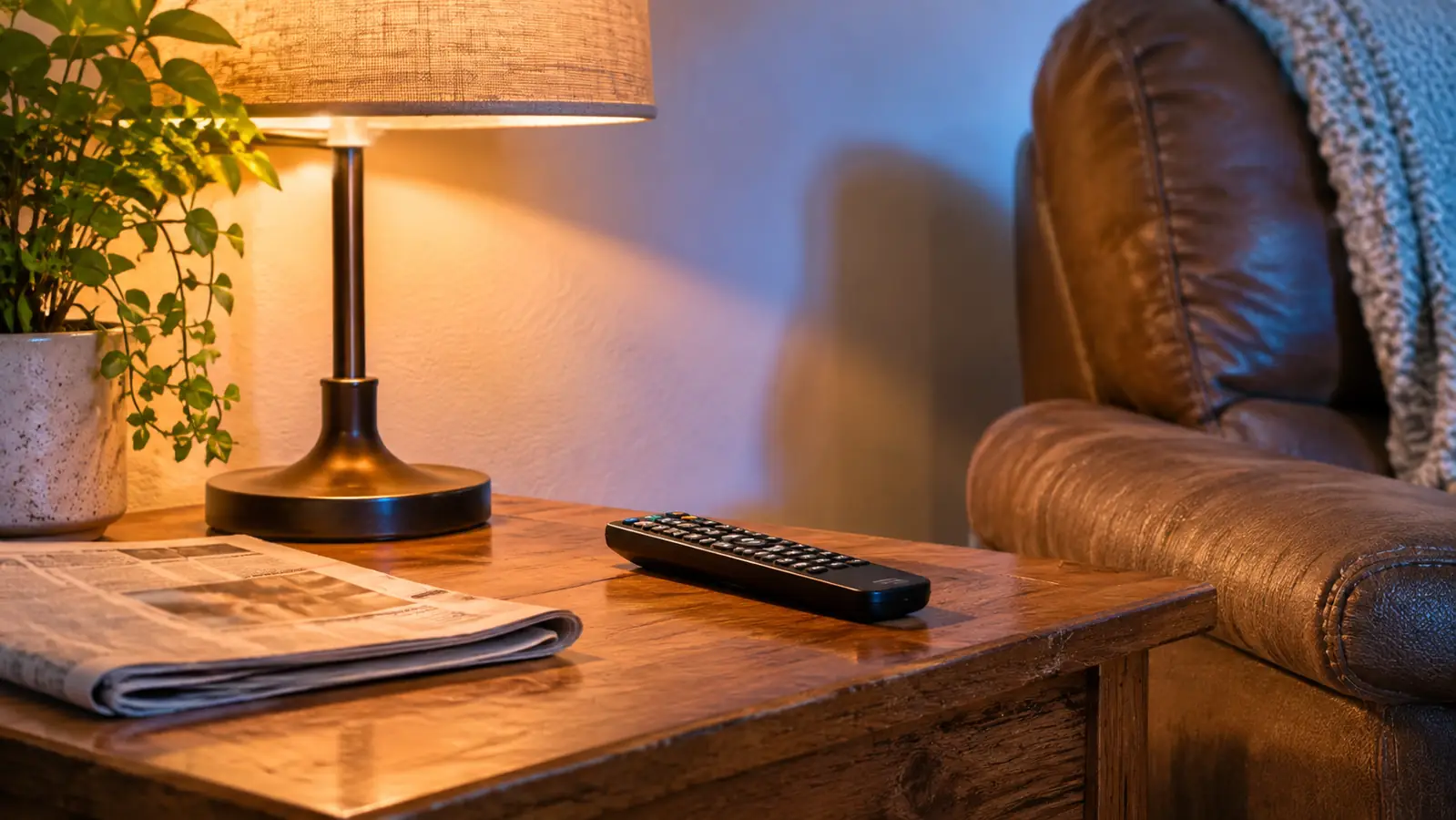
What I settled on after a couple of weeks: level six for the evening news, level eight for dramas, and Supervoice for anything with an orchestra in it. On a tired evening I go higher and I do not apologize for it. It is a remote, so I am not getting out of the recliner to change a setting, which matters more at 71 than it did at 51.
Step 5: Fix the Room and the Habits Around the Hardware
Our house is a one-story ranch with a living room that has some carpet and some bare wall. Bare surfaces bounce sound around and smear the consonants you are working so hard to get back. If your room is all hard floor and glass, a rug and a set of curtains will do more than one more click of voice boost. That is free advice from a man who spent four decades in unfinished basements.
Turn the subtitles on. I do not care if it stings a little the first night. Captions plus a clear voice boost is the difference between watching a show and decoding one, and nobody in your house is grading you on it.
The last habit is the one that saved my marriage a small argument every evening: stop riding the volume. Find the setting where dialogue is clear, then leave the number alone. For years it was me up two clicks and Carol down two clicks, back and forth, all night. Now the number stays put, and the room stays quiet about it.
What Else Helps
Sit closer if the room allows it. Eleven feet is what I have and what the layout gives me, but even a couple of feet makes an audible difference, and it costs nothing but a Saturday afternoon of rearranging.
Ask the person you watch with to be honest about the volume. Carol told me plainly that the TV was too loud, and it embarrassed me for about a day. Then it got me moving. If nobody has told you, ask. You may not like the answer and you will probably need it.
For late nights when Carol has gone to bed, some folks use a wireless TV headphone set instead. That is a separate purchase with its own tradeoffs, and I would not talk you out of it. It just solves a different problem than a soundbar does, which is the whole point of getting the order right.
And give the whole setup a week before you pass judgment. The first night you will over-boost because you are excited, and everything will sound sharp and strange. By the fourth evening your ear has adjusted and you will wonder why you waited so long to bother.
Where It Fell Short for Me
It is a wired unit, and that is the honest tradeoff. There is no pairing, no app, no juggling a phone to change a setting. For me that is a feature, since I have enough things that want to be charged. If you want a soundbar that streams music from your phone, this is not that soundbar, and you should know it going in.
It also will not fix everything. Crowd noise in a football broadcast still wins sometimes. Fast overlapping dialogue in a British drama still loses me on the first pass, and I back it up ten seconds like everyone else. And if your hearing loss is more than mild to moderate, the boost can only do so much. Mine works for me at level six. Yours may not, and that is worth finding out rather than assuming.
Level six, during the six o'clock news, was the first time in years I got the whole weather report without turning to Carol and asking her what he said.
If your TV has an optical or analog output, this is where I would start
The ZVOX AccuVoice AV157 gave me back the evening news at a volume Carol can live with. Twelve levels of voice boost, Supervoice for the loud stuff, and a remote that stays on the end table. Check the back of your set first, then check today's price.
Amazon See the ZVOX AccuVoice AV157 on Amazon →