
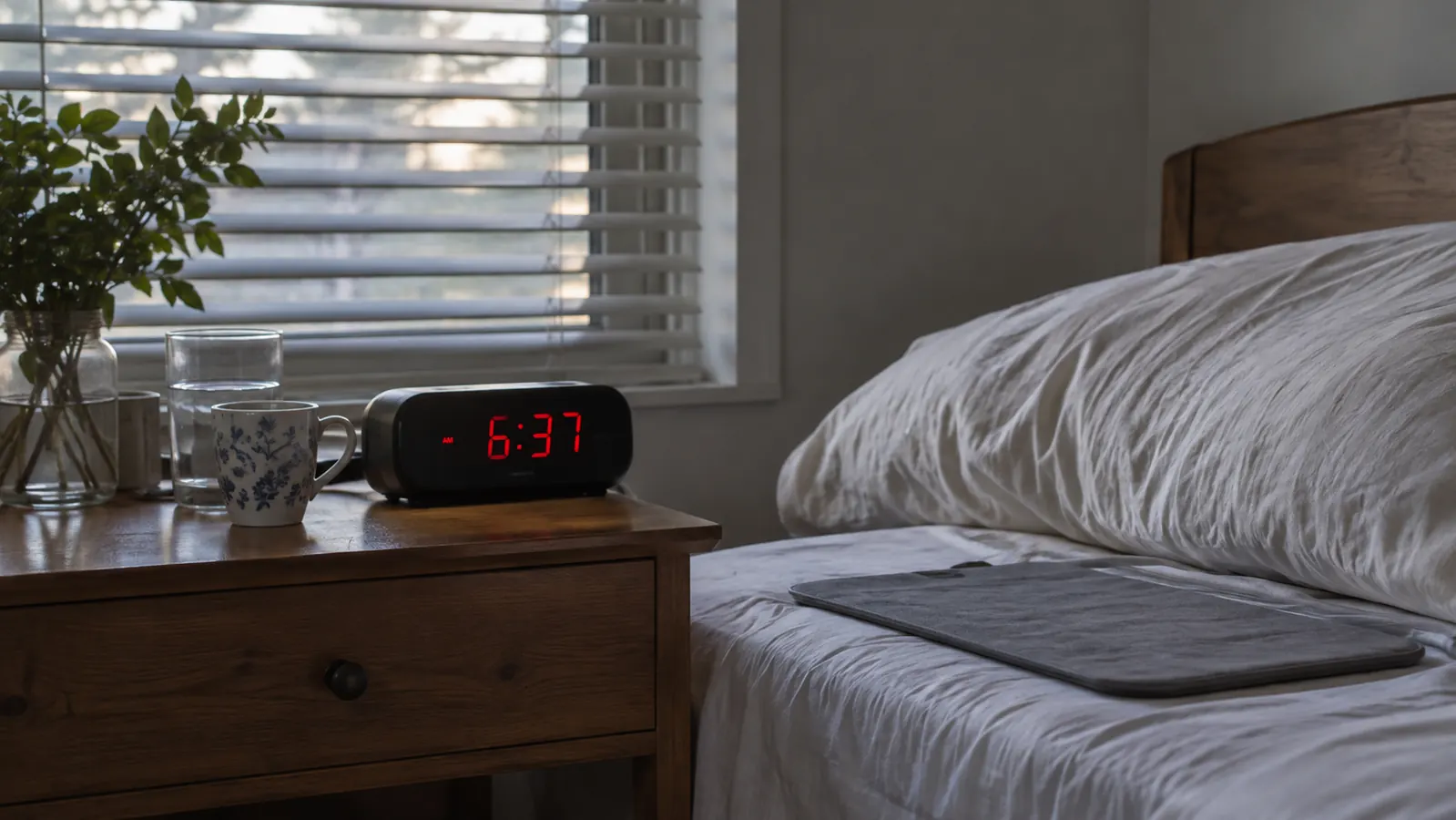
I slept through the tornado siren in 2019. Carol was already in the hallway with her shoes on when I finally sat up, and she has never let me forget it. I have mild to moderate high-frequency hearing loss in both ears, worse on the left, from 38 years of job-site noise. An audiologist in Rolla diagnosed me at 66. Here is what that means at bedtime. I take my hearing aids out, put them in the drying cup on the dresser, and the room goes quiet in a way most people cannot picture. A clock radio turned all the way up is not loud to me. It is a faint noise I can roll over and ignore.
That is the whole problem with a sound-only alarm. It assumes you can hear it. About two years ago I bought the Sonic Bomb from Sonic Alert, mostly because it came with a bed shaker and a volume control I could actually turn down. It has been on my nightstand every night since. It is not perfect and I will get to that, but it is the first alarm I have owned that gets me out of bed without Carol having to poke me in the ribs. Here are ten reasons it works for a person with hearing loss, roughly in the order I noticed them.
You cannot hear the alarm. That is the problem this one solves.
The Sonic Bomb pairs an adjustable 113dB alarm with a bed shaker that goes under your mattress or pillow. Two years on my nightstand and it has not missed a morning.
Amazon Check Today's Price on Amazon →Your hearing aids are in a cup on the dresser, and this alarm does not care
This is the reason the other nine items exist. My aids come out at 9:30 and I am functionally deaf to a nightstand by 9:31. Audiology does not offer an overnight setting. So the alarm has to reach me another way, and the shaker does. It is a flat pad on a cord that slides under the mattress or the pillow. At 6:10 it starts moving, and my body notices before my brain does. I have not slept through it once.
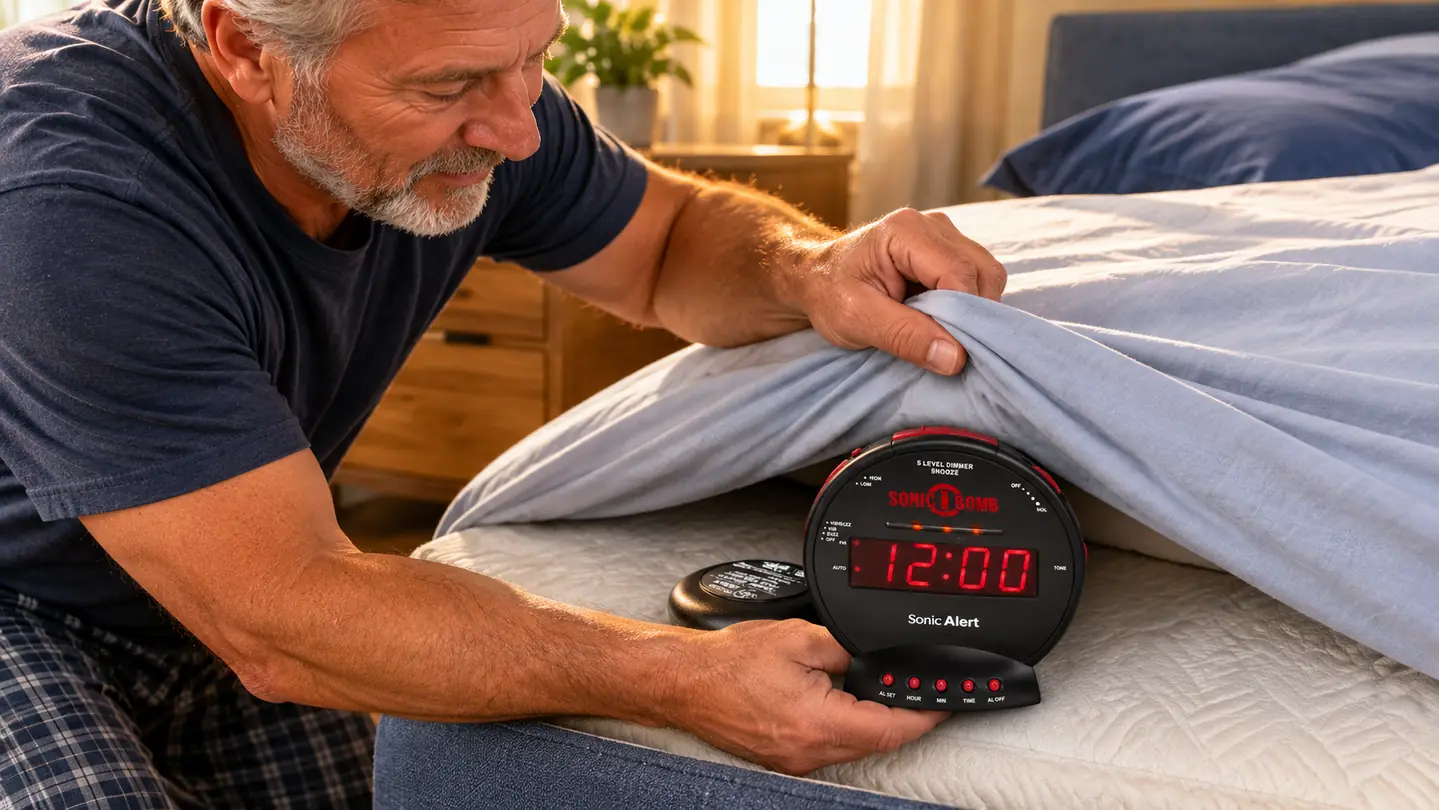
Vibration travels four inches of mattress. Sound has to cross a whole room and a damaged ear.
Sound has to leave a nightstand, cross eleven feet of bedroom, and get through an ear that does not process high frequencies anymore. Vibration has to move through the mattress you are lying on. I put mine between the mattress and the box spring on my side, which is where I feel it best. Carol sleeps on the other side and says she barely notices it. That surprised me, and it is why we still use one clock in one room instead of two.
113 decibels at the top of the dial, and you choose how much of it you want
The listing claims 113dB and I have no reason to doubt it, but the part that matters is that the volume adjusts. I run mine at about two thirds. Full volume in a small bedroom is genuinely unpleasant, and I do not need unpleasant, I need awake. Sunday mornings I turn it down a lot. That dial is the difference between a tool and a punishment.
The alarm keeps going for up to 59 minutes instead of giving up on you
Every alarm I owned before this one rang for a few seconds and quit. Miss that window and you were on your own. The Sonic Alert clock lets you set the alarm duration anywhere from 1 to 59 minutes. Mine runs for four. Long enough that a half-awake reach in the wrong direction does not end the morning, short enough that nobody else in the house has to hear it.
Snooze adjusts from 1 to 30 minutes, which finally matches how I actually wake up
Most snooze buttons are nine minutes exactly, and I have never met the person who decided that. This one goes from 1 to 30. I use ten. Carol sets hers to 20 on the mornings she is up first for an appointment. It sounds like a small thing on a spec sheet. In practice it is the setting I touch more than any other.
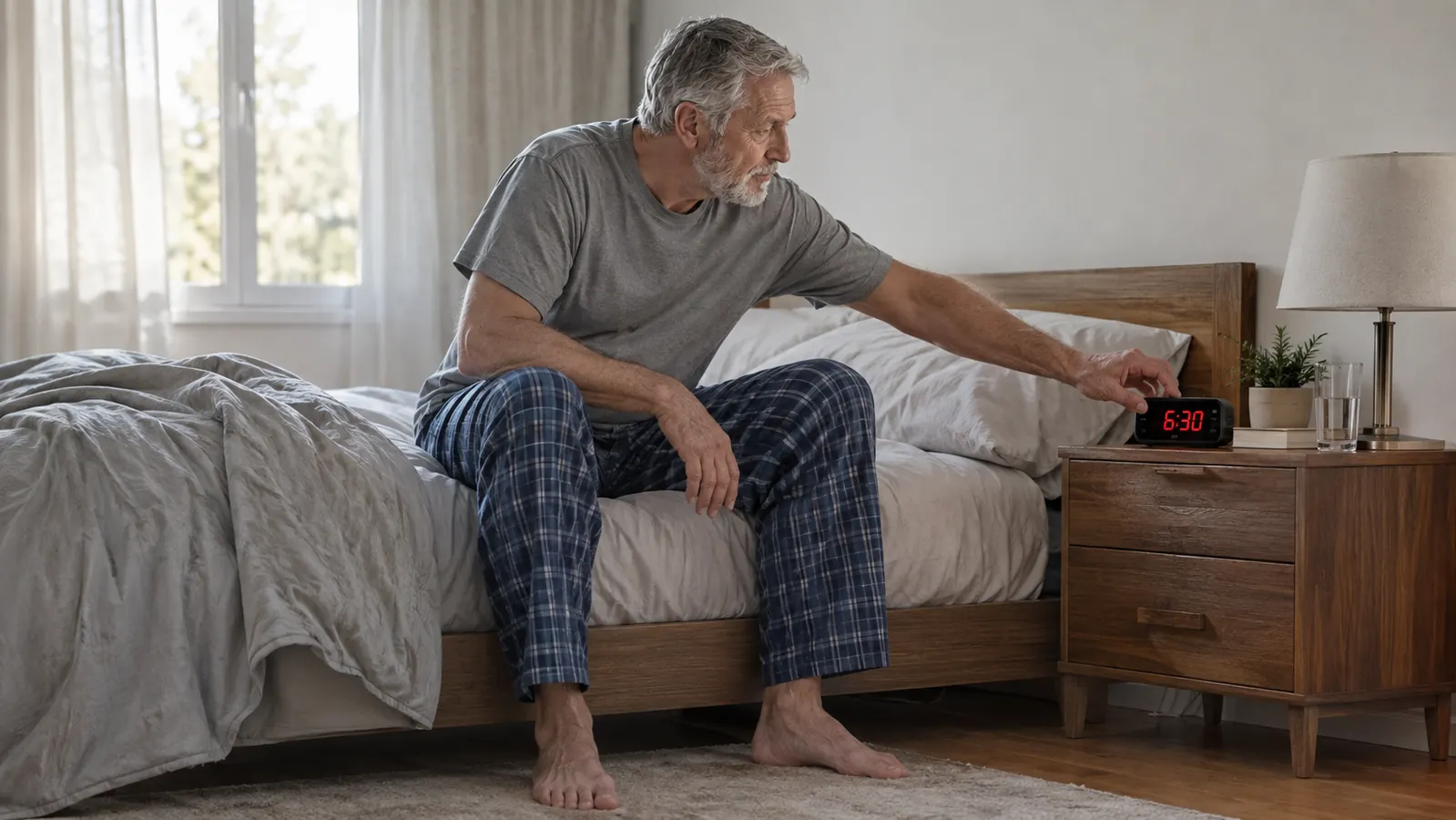
A power outage at 3 a.m. does not cancel your morning
We lost power twice last winter, once for six hours. The clock runs on household power through the included supply, and it takes a 9V battery for backup so the time and the alarm hold when the house goes dark. My old clock reset itself to midnight and did nothing at all. This matters more to a hearing-impaired sleeper than to anybody else, because you are the last person in the house to hear the storm that knocked the lights out.
Dual time gives you a second alarm for the mornings that are not routine
The clock has a dual time feature, which in this house means one alarm for weekdays and a second one for Sunday service. I set it once and have not thought about it since. Before this, changing an alarm time meant fumbling at tiny buttons half asleep and getting it wrong one morning in five. Now I do not change anything. The clock already knows.
The digital display is readable at 4 a.m. without hunting for your glasses
The screen is listed at 14 centimeters and the body is 5.5 inches wide, 5.5 inches tall and 3 inches deep, so the numbers are not jammed into a strip. I can read the time from the pillow with my glasses off. That sounds trivial until you are lying there at 4:40 trying to decide whether it is worth getting up yet.
It is corded, so you are not buying batteries every other week
Regular power comes from the wall, with the 9V only there as backup. I have replaced that one battery twice in two years. My last alarm ate four AA cells a month and always picked the night before an early appointment to die. The unit weighs 0.6 kg, heavy enough that it stays where you put it when the shaker fires. Nothing about it walks off the nightstand.
Carol stops being your backup alarm
For years Carol woke me up by shaking my shoulder, which is a poor job to hand another person. She is 69 and she does not need to be on duty at six in the morning anymore. The clock does it now. That is not printed on the box, but it is the change I would buy again first if I had to start over with one purchase.
What I'd Skip
Two warnings, both honest. First, the shaker is not silent. If you sleep alone, that is a non-issue. If you share a bed with a light sleeper, test the placement on a Saturday morning before you trust it, because a pad under the mattress does move the mattress a little. Second, the buttons and the menu take an evening to learn. I am an electrician and I still read the user guide twice. Set the Sonic Alert clock up on a Saturday afternoon, not at ten at night on a Sunday when you need it working by Monday. And one last thing that is not about the clock at all: if you have not had a hearing test, go get one. An alarm clock is a workaround. It is not a diagnosis and I am not the man to give you one.
I have slept through a tornado siren and a clock radio at full volume. The shaker has not missed a morning in two years.
If sound alone stopped working, this is the fix I landed on.
The Sonic Bomb from Sonic Alert: adjustable 113dB alarm, bed shaker for under the mattress or pillow, alarm duration from 1 to 59 minutes, snooze from 1 to 30 minutes, and a 9V battery backup. It sits on my nightstand and it is staying there.
Amazon Check Today's Price on Amazon →